Blog
FDA Approval or Marketing HYPE?

What You Should Know About Minoxidil and Finasteride Claims about FDA Approval
Why It Matters
In the increasingly crowded marketplace for hair loss solutions, consumers are being bombarded with bold claims—some that carry the weight of scientific backing, and others that blur the line between regulatory approval and marketing hype. Two of the most commonly referenced ingredients in these products are minoxidil and finasteride—the only drugs approved by the U.S. Food and Drug Administration (FDA) specifically for the treatment of androgenetic alopecia (pattern hair loss).
But a worrying trend is emerging: many personal care brands, telehealth startups, and even compounding pharmacies are suggesting that their proprietary formulations—often containing minoxidil or finasteride in combination with other ingredients—are “FDA-approved” by association. This is misleading and, in some cases, potentially dangerous.
In this article we explore the origins of FDA approval for minoxidil and finasteride, review the scientific rigor that supported their approval, and offer guidance for consumers and formulators alike on what constitutes a legally compliant and ethically sound marketing approach.
What It Means to Be FDA Approved
FDA approval of a drug means that the product has undergone a rigorous multi-phase clinical trial process proving safety and efficacy for a specific indication. The results must demonstrate that the drug’s benefits outweigh its risks for a target population.
The FDA does not approve:
- Finished products simply because they include an approved active ingredient
- Custom formulations or compounded mixtures with added ingredients
- Over-the-counter or telemedicine-based adaptations unless individually submitted and reviewed
When a brand claims that a cocktail of minoxidil, finasteride, or other actives is FDA approved, it is stretching the truth. Only the original, tested drug in its studied form is approved—not the blend, delivery format, or dosage unless resubmitted and cleared through the full NDA (New Drug Application) process.
The Original FDA Pathway: Minoxidil and Finasteride
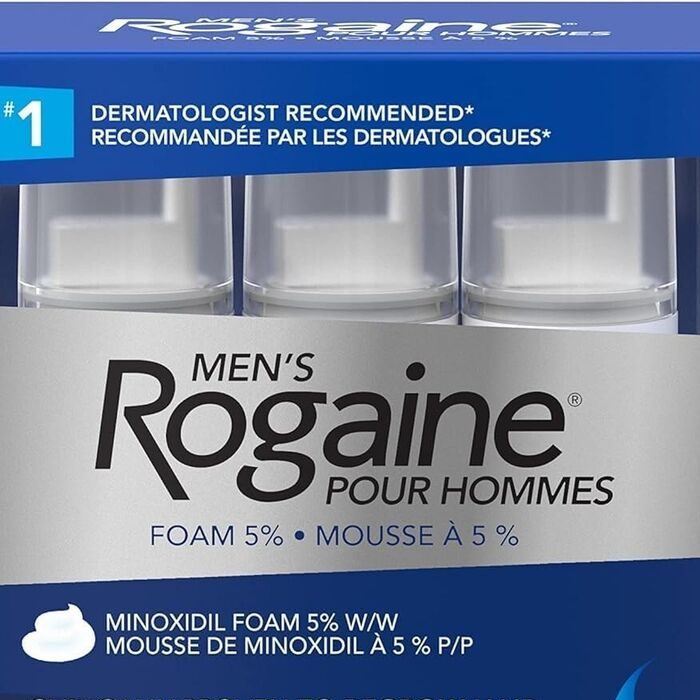
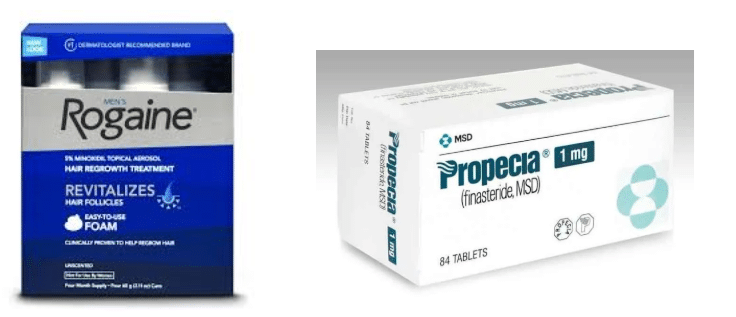
Minoxidil was first approved by the FDA in 1988 under the brand name Rogaine. It began as a treatment for high blood pressure, but trials revealed an unexpected side effect: hair growth. Subsequent studies confirmed its efficacy as a topical hair growth stimulator when applied to the scalp at 2% and later 5% concentrations.
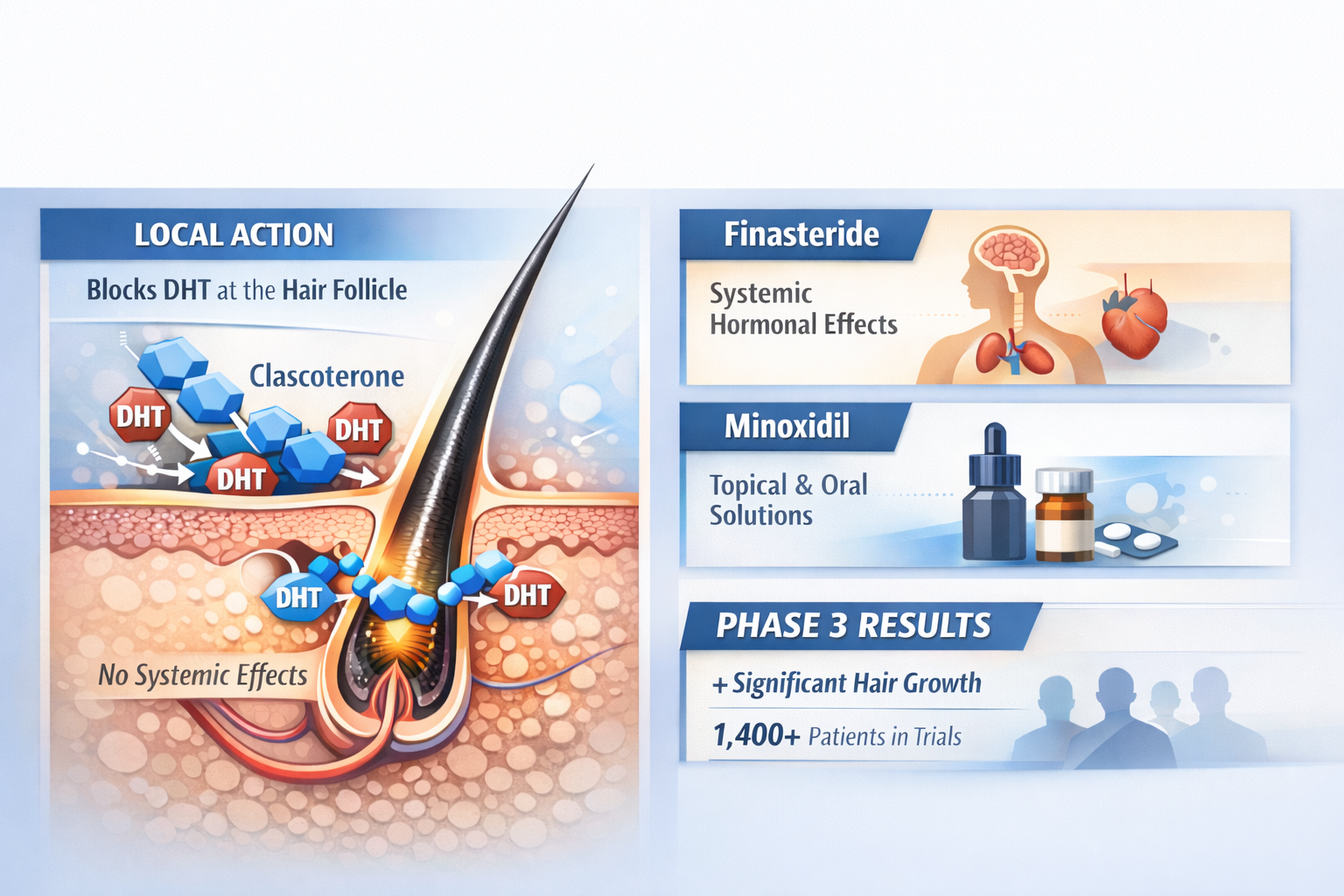
Finasteride, sold under the name Propecia (1 mg), received FDA approval in 1997 as an oral treatment for male pattern baldness. This followed the success of Proscar (5 mg), which had been approved for treating benign prostatic hyperplasia. Finasteride acts as a 5-alpha reductase inhibitor, reducing levels of dihydrotestosterone (DHT), the hormone implicated in hair follicle shrinkage.
The FDA approval of these drugs required:
- Multi-year double-blind placebo-controlled clinical trials
- Detailed pharmacokinetics, side effect analysis, and toxicology data
- Strict manufacturing controls and post-market surveillance
This level of evidence cost pharmaceutical companies tens of millions of dollars and years of research.
The Rise of ‘FDA-Washed’ Marketing
Fast forward to the present: numerous brands are using “minoxidil” and “finasteride” in their marketing headlines to evoke confidence. But problems arise when these formulations:
- Include these actives with other untested ingredients (e.g., caffeine, peptides, vitamins)
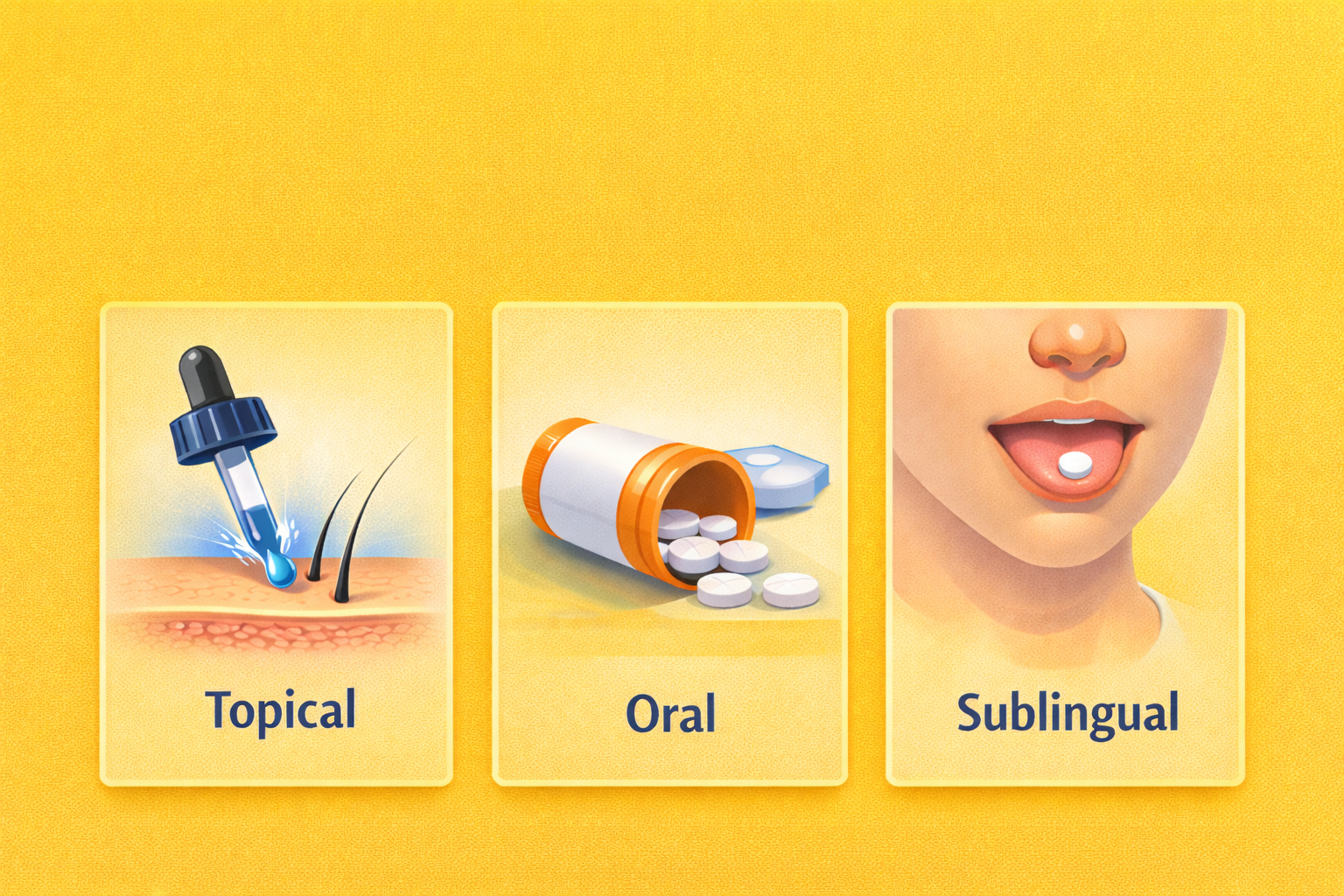
- Are delivered topically, despite the original FDA approval being oral (in the case of finasteride)
- Are packaged in formats (mists, foams, chewables) not included in the original approval
Some companies even claim their product is “FDA-approved” simply because they use minoxidil purchased from an FDA-registered supplier. This misleading phrasing implies that the entire product formulation is approved, which it is not.
The FDA Speaks: 2024 Warning on Topical Finasteride
In a 2024 warning, the FDA clarified its position on compounded and telemedicine-distributed versions of topical finasteride. It stated:
“There is no FDA-approved version of topical finasteride. Compounders and telehealth platforms that market finasteride in topical or combination form may be exposing consumers to unregulated and potentially harmful products.”
Between 2019 and 2024, the FDA received 32 adverse event reports related to compounded topical finasteride products. Reported side effects included:
- Erectile dysfunction
- Suicidal ideation
- Testicular pain
- Brain fog
- Persistent symptoms even after discontinuation
One major telehealth provider, Hims & Hers, was singled out for offering both a topical spray combining minoxidil and finasteride and a chewable finasteride tablet—neither of which has been reviewed by the FDA for safety or effectiveness.
(Source: FDA Safety Communication, 2024)
Consumer Advice: How to Read Between the Lines
To protect yourself and make an informed decision, here’s how to assess claims:
- Look for precise wording: “Contains FDA-approved minoxidil” is different from “FDA-approved product.”
- Check the format: If a product delivers finasteride topically or in chewable form, it is not FDA approved, even if it uses the same molecule.
- Scan for disclaimers: Reputable brands will include disclaimers such as “This formulation has not been evaluated by the FDA.”
- Ask your doctor or pharmacist: Professionals can help interpret labeling and safety.
Guidance for Product Developers and Marketers
Creating a competitive, science-driven hair loss formula is possible without misleading consumers. Here are some suggestions:
- Be transparent: Acknowledge that while an ingredient may be FDA-approved, your formulation is not unless separately approved.
- Emphasize function, not legality: Instead of touting “FDA approval,” explain the mechanism of action of the active (e.g., “blocks DHT,” “stimulates follicles”).
- Use structure-function claims: These are permitted for cosmetics if they do not imply disease treatment (e.g., “improves the appearance of thinning hair”).
- Avoid drug claims without proof: Do not claim your product “treats baldness” or “reverses alopecia” unless supported by clinical trials.
For formulators exploring finasteride or minoxidil inclusion, best practices include:
- Consulting with a regulatory compliance expert
- Performing in vitro and human use safety tests on the entire formulation
- Filing a New Drug Application (NDA) if seeking true FDA approval
Ethical Marketing: What’s at Stake
Beyond regulatory risks, misleading claims damage consumer trust. In a market already flooded with half-truths, science-based honesty is a long-term competitive advantage. Positioning your product as a complementary cosmetic aid—not a substitute for medical treatment—avoids ethical gray zones and builds credibility.
Brands like Keeps and Roman have succeeded by being clear about what their products do and don’t do. Even when offering FDA-approved minoxidil, their labeling strictly adheres to the approved dosage and format.
Transparency, Testing, And Truth
 Minoxidil and finasteride have earned their reputation through rigorous science and regulatory review. But that does not grant automatic legitimacy to every product that uses them. The FDA’s concern about off-label formulations—particularly topical finasteride—serves as a clear warning to manufacturers and consumers alike.
For consumers, the takeaway is this: read labels carefully, question sweeping claims, and consult licensed professionals. For manufacturers, the goal should be to innovate ethically—balancing competitive edge with scientific and legal integrity.
When it comes to hair loss, trust isn’t built through buzzwords. It’s built through transparency, testing, and truth.
References:
- U.S. Food & Drug Administration (FDA). “Safety Communication on Topical Finasteride.” 2024.
- FDA Orange Book Database (Propecia, Rogaine)
- ClinicalTrials.gov: Minoxidil and Finasteride Efficacy Studies
- Journal of the American Academy of Dermatology. 2019;80(4):1141-1148.
- U.S. Federal Trade Commission (FTC): Marketing and Health Product Claims Guidelines
- Mintel Hair Loss Treatment Trends, 2023–2024
- Hims & Hers Health Investor and Product Reports, 2024