Blog
12 Quick Steps for a Hair Loss Consultation


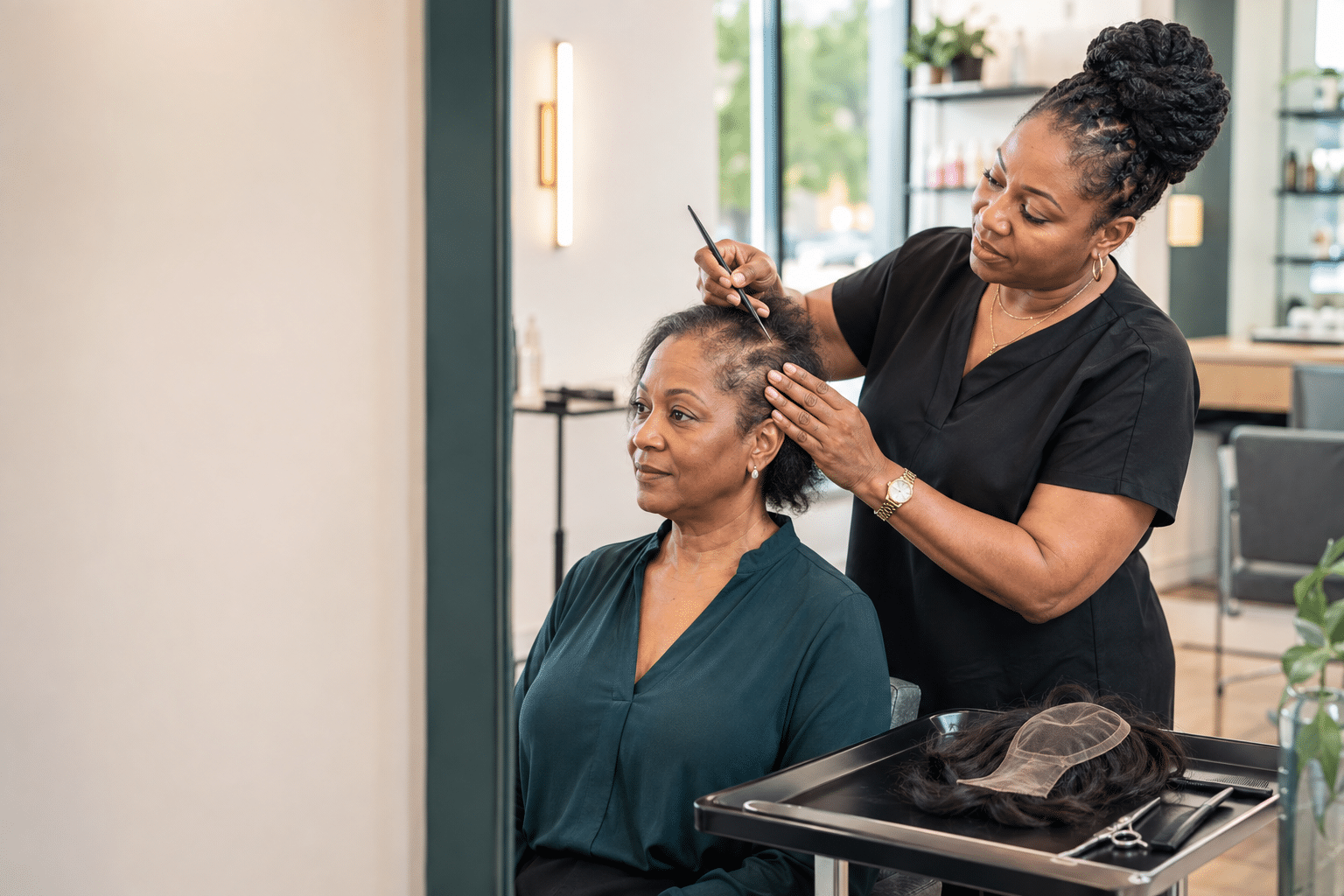
Hair loss consultation can be an uncomfortable experience as hair loss is a sensitive topic. But as a hairstylist/physician, you are often your clients first line of support when it comes to their concerns about hair loss. Keep reading to learn why it’s important to talk to your clients about hair loss and how to help them find a solution for thinning hair.
Why it’s important to talk to your clients about hair loss.
Many clients do not realize their hair is thinning. You have a direct, close-up view of their hair and scalp, so it’s important that you share any concerns you have about their hair as soon as possible.
Your clients also look to you for wisdom on all things hair. Just as you would advise them, on how to fix faded color or split ends, you can also advise them on whether or not their hair is thinning and steps they can take to disguise or fix the issue. Believe it or not, many clients would rather speak to their hairdresser about their hair loss than their doctor!
Most importantly, advising your clients on this sensitive issue creates trust and helps them to rebuild their confidence.
How to start the conversation
Not sure how to bring up the topic of hair loss? Here are a few easy icebreakers to get the ball rolling:
- “Are you having any challenges with your hair?”
- “If you could change anything about your hair, what would it be?”
- “Would you be interested in sampling a product that helps enhance the health of our hair?”
Women are usually easier to approach about the subject of hair thinning since they tend to be more proactive about their personal appearance. Men may be mor sensitive, so a good tip is to avoid phrases like “hair loss” or “balding.” Instead, talk to your clients about “hair density” or “hair health!” For example, you might mention to your client that you’ve notices less density in their crown area in recent months.
10 Quick Steps for a Hair Loss Consultation

Ready to get started? Follow these steps for an effective hair loss consultation.
- Seat clients comfortably in a relatively private environment. Although hair loss is quite common, it can be a sensitive or embarrassing issue for your client so best to have this conversation somewhere you won’t be overheard.
- Ask clients open questions rather than yes or no questions
- Reassure your client that this is a common problem and that you can help them find a solution
- Identify underlying issues related to their hair problems
- Allow time for your client to respond and offer feedback
- Take their issue seriously and reply with empathy
- Ask permission to analyze their hair and scalp
- Record this information and keep a record of it to monitor progress
- With your client’s permission, take photographs of scalp and hair to monitor their progress.
- Recommend a follow up appointment to give your client a sense of support
Recognizing Hair Thinning
Remember, you cannot diagnose the cause of your client’s hair loss unless you are a doctor. You are simply investigating whether or not your client is experiencing hair thinning, regardless of the cause.
For male clients with a bald spot, ask if the size of the bald spot has been increasing with time or if their hairline has been progressively receding? With permission, take pictures of your client’s scalp or hairline to track hair loss over time.
For female clients, part hair and examine the width of the part. A part that shows more scalp than normal indicates hair thinning.
Next Steps
If your client is definitely experiencing hair thinning, advise them to speak with a doctor to diagnose the cause. Many cases of hair loss are caused by androgenetic alopecia (in which hair loss is the primary symptom), but hair loss can sometimes be a symptom of a more serious issue.
You can also recommend Viviscal PRO Hair Growth Supplements to optimize hair health and XFusion by Toppik hair fibers to help hair look thicker and fuller.