Blog
What If You Could See the Future You?

How New Tech Could Reveal the Emotional Impact of Healthier, Thicker Hair
Hair has long been a symbol of identity, vitality, and confidence. Across cultures and centuries, the state of one’s hair has carried emotional, social, and aesthetic significance. But when hair begins to thin or fall out—whether due to age, genetics, illness, or stress—the emotional toll can be profound. Hair loss can erode self-esteem, cause anxiety or depression, and affect everything from social engagement to professional performance. Fortunately, modern hair restoration solutions—from wigs and hair additions to advanced clinical restoration—don’t just restore appearance; they can also restore emotional well-being.
Now, a new frontier is opening: emotional measurement technologies, originally developed for the cosmetics and fragrance industries, are revealing the power of beauty interventions to spark measurable feelings of happiness, confidence, and calm. The hair care and restoration industry has a unique opportunity to adopt and adapt these innovations to show clients—not just tell them—how life-changing it can be to “bring back the hair you love.”
This article explores that opportunity, showing how emotional impact and technological insight can converge to transform personal well-being and professional practice alike.
-
The Psychology of Hair Loss: More Than Skin Deep
Hair loss can be experienced as a personal crisis. It disrupts body image, triggers insecurities, and in many cases, leads to avoidance behaviors, isolation, or embarrassment. While society often dismisses hair loss as cosmetic, research consistently shows that it has deep emotional consequences.
A study published in the Journal of the American Academy of Dermatology found that nearly 40% of women with visible hair loss experienced significant psychological distress, including low self-esteem and social anxiety. Among men, hair loss has been linked to increased risk of depression and reduced feelings of attractiveness—especially among younger demographics.
For many, the pain is silent but persistent. Clients may not voice the emotional impact when they sit in a salon chair or walk into a hair restoration clinic—but they are seeking more than hair. They are seeking relief from emotional discomfort and a return to the person they once saw in the mirror.
-
The Emotional Rewards of Hair Restoration: Real and Measurable

Wigs, hairpieces, and non-surgical hair additions have long helped individuals cope with hair loss. But their benefits extend far beyond surface appearance. Hair additions can trigger immediate improvements in mood and confidence. Anecdotally, clients often report feeling “like themselves again” after a transformation session. But science is now catching up with these testimonials.
A 2021 clinical study conducted at Kyung Hee University Medical Center in Seoul examined the effect of wearing wigs on self-esteem and depression scores among cancer survivors. The results were striking: participants showed a 47% increase in self-esteem and a significant decrease in depression symptoms just four weeks after adopting a wig.
Similarly, in clients with alopecia areata, researchers found that wearing hairpieces or undergoing hair restoration improved social functioning, reduced feelings of stigma, and enhanced personal relationships.
In short: More hair often means more life—emotionally, socially, and psychologically.
2.5. Emotional Design in Beauty: A New Industry Standard
In recent years, leading cosmetic and personal care companies have moved beyond simply formulating products that perform well physically. A growing number are now prioritizing how those products make consumers feel on an emotional level. From skin care to fragrance, the focus has shifted to designing experiences that foster positive emotional states—such as joy, calm, confidence, and even focus.
Capturing Feelings, Not Just Feedback
Traditional consumer testing in the beauty industry often relied on verbal feedback, surveys, or sensory panels to determine a product’s appeal. While useful, these methods only scratched the surface of how a product affects emotional well-being.
Today, new tools—such as EEG scans, facial recognition software, and biometric analysis—are being used to capture unconscious emotional reactions. For example, participants might apply a skin cream while researchers observe changes in brain activity or track facial micro-expressions that indicate subtle shifts in mood. This provides a more accurate picture of how a product affects emotional states in real time.
Rather than asking consumers if they “like” a product, brands now measure whether it evokes relaxation, excitement, or pleasure—all of which are key to long-term satisfaction and brand loyalty.
Scent and Emotion: A Scientific Relationship
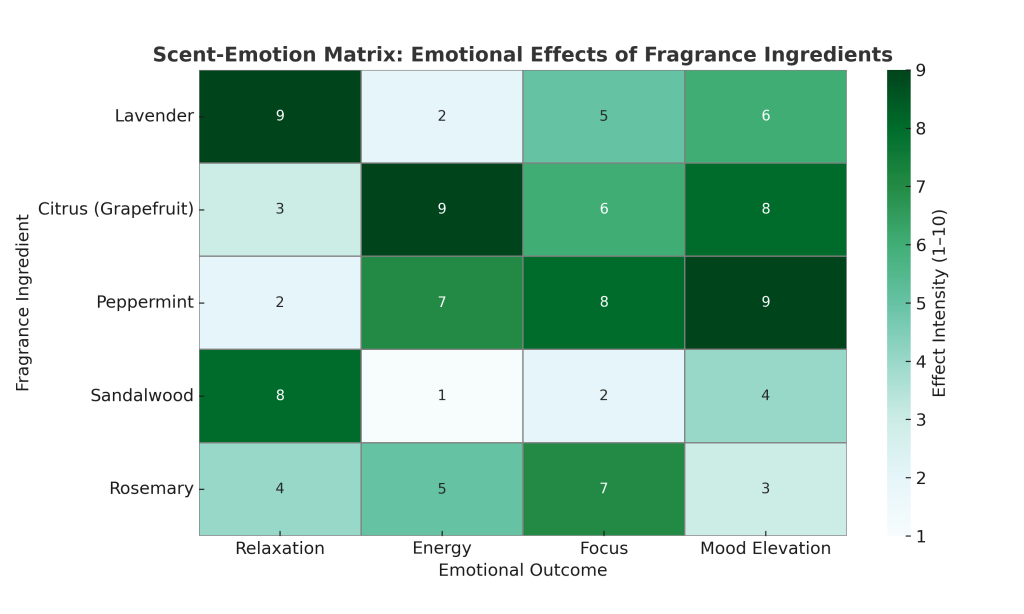 Figure 1 Adapted from studies in aromachology and cosmetic neuroscience (e.g., Firmenich, DSM-Firmenich, IFF, and academic research)
Fragrance companies are also investing heavily in neuroscience. Scents can trigger powerful emotional and memory-based reactions, and brands are using that to their advantage. Some firms now map scent profiles to emotional outcomes—such as vitality, serenity, or euphoria—and design signature fragrances that reliably stimulate those feelings across different cultures and demographics.
For example, ingredients like bergamot and grapefruit are often used to enhance energy, while sandalwood and lavender promote a sense of calm. These correlations are not merely anecdotal—they’re being confirmed in labs using advanced imaging and psychological testing.
Immersive, Interactive Experiences
Another notable development is the use of digital environments to create immersive emotional experiences. Beauty brands are experimenting with gamified apps and interactive displays that combine product exploration with sensory storytelling. These “phygital” (physical + digital) experiences are especially appealing to younger consumers, who want more than function—they want meaning, mood, and even escape.
The result? A beauty ritual that’s not just about skin or scent—but about state of mind.
-
Emerging Technologies That Measure and Influence Emotions
New tools are being introduced that go beyond the standard self-report survey. EEG-based systems can track real-time brain activity during product use, providing objective data on relaxation, engagement, and positive emotional response. Facial expression analysis—now available through advanced software and mobile apps—can identify micro-expressions that signal joy, surprise, or satisfaction.
These tools are already being used to measure reactions to skin creams and fragrances. Applied to hair consultations or product testing, they can reveal the emotional “wow moment” when someone sees or feels the effect of fuller, healthier hair.
Estimated implementation cost:
EEG devices: $500–$2,000
Emotion-tracking software: Free–$1,000
ROI: Increased trust, personalized consultation experiences, stronger conversion rates
- Fragrance and Neuroscience
Certain fragrances—like citrus for energy or lavender for calm—are now being embedded in hair products to enhance mood. Ingredient firms are using AI and brain imaging to match scents with emotional outcomes. This research is influencing product formulation with the goal of producing measurable improvements in relaxation, clarity, and happiness.
Estimated cost of integration:
Custom scent development: $5,000–$15,000
Potential gains: Differentiation, brand loyalty, enhanced daily experience
- Gamified and Immersive Try-On Experiences
Gamification, augmented reality, and immersive digital tools now allow clients to “try on” looks before making decisions. For hair, that could mean visualizing oneself with thicker hair, fuller styles, or color changes—helping to emotionally commit to a transformation.
Estimated setup cost:
Plug-and-play AR: $2,000–$8,000/year
Custom development: $25,000+
ROI: Higher engagement, reduced hesitation, faster decision-making
-
Recommendations for the Hair Replacement Industry
- Introduce Emotion-Based Consultations
Go beyond before-and-after pictures. Provide:
- Facial expression tracking
- Brief emotional surveys
- Optional EEG scans for premium clients
This data helps personalize recommendations and emotionally reinforce the client’s decision.
Startup cost: $1,000–$6,000
Value: Deeper emotional connection, higher conversion, client satisfaction
- Add Mood-Boosting Fragrances and Textures
Reformulate daily-use products to incorporate energizing or calming effects. Texture (cream, foam, gel) also affects tactile comfort.
Formulation cost: $1.50–$3.50 per unit
Business advantage: Transforms function into emotional ritual
- Offer Virtual Try-Ons
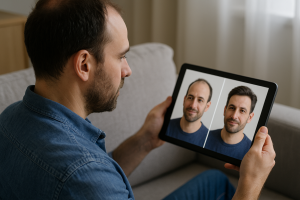 Use apps or software that allow people to try on different wigs, additions, or styles in real time.
Cost: $2,000–$30,000
Upside: Reduces uncertainty, increases pre-purchase engagement
- Capture Emotional Testimonials
Use simple surveys or interview clips to show emotional before-and-after data—not just visual change.
Tools: Google Forms, Typeform, smartphone video
Effectiveness: Builds emotional proof for new prospects
-
The Transformational Power of Visualization in Consultations
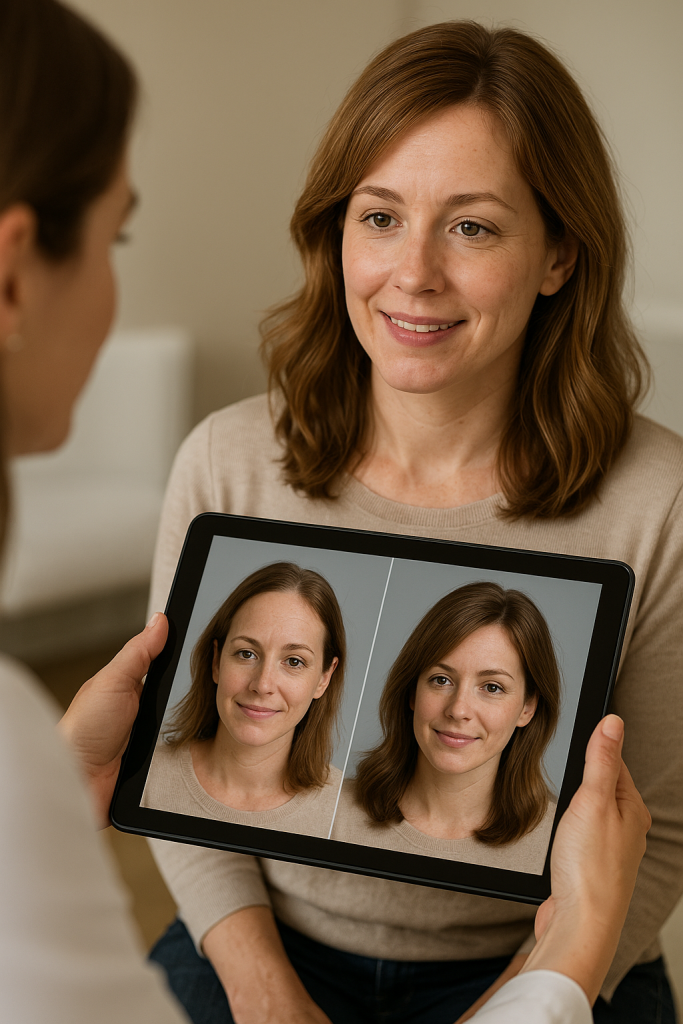 Even with compelling solutions, many clients arrive at hair loss consultations unsure about taking the next step. They may worry: “Will this really make a difference in my life?”
That’s where the power of emotional visualization comes in.
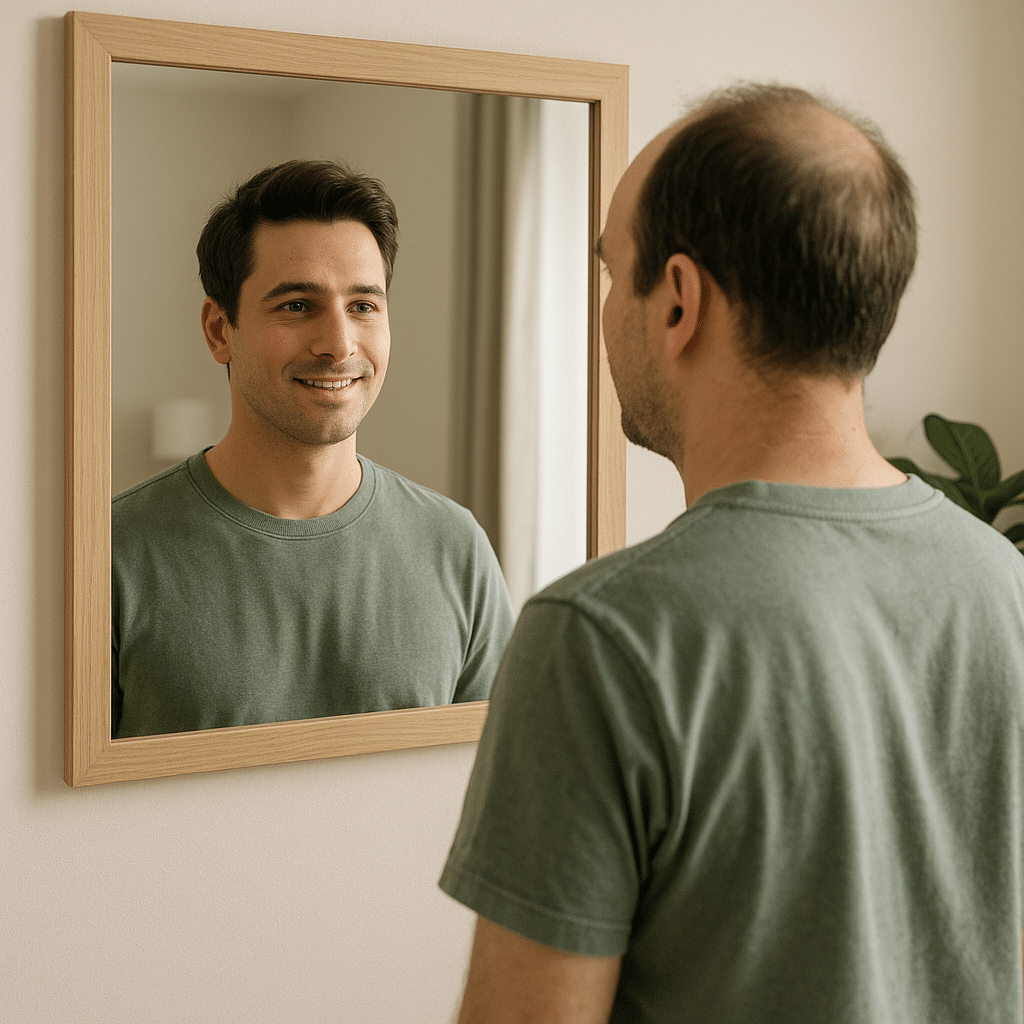
By showing a prospective client digitally enhanced images of themselves with restored hair—using AI morphing or AR simulation tools—professionals can spark an emotional breakthrough. This is more than vanity; it’s identity. People often don’t realize how much they’ve adapted to loss until they see what they’ve been missing.
Pairing these visuals with emotional feedback tools (e.g., facial expression trackers, brief mood scales) reveals subconscious reactions: joy, hope, or even tears. These reactions, captured in real time, can help the client acknowledge the emotional benefits—even if they weren’t fully aware of their emotional distress to begin with.
Suggested Consultation Setup:
- High-resolution screen or tablet for image comparison
- A private, calming consultation space
- Short mood survey before and after viewing
- Optional use of AI-driven emotion recognition for added depth
Startup costs:
Photo morphing tools or apps: $100–$500
AR try-on licenses: $1,500–$5,000/year
Facial expression tools: Free–$1,500
Business impact:
20–40% higher conversion rate
More emotionally satisfied clients who refer others
-
Final Thoughts: The Future of Hair Care is Human-Centered
Hair isn’t just keratin—it’s confidence, personality, and power. And restoring hair is about more than restoring volume; it’s about restoring a person’s sense of self. Today’s emerging technologies offer a new way to capture and convey that emotional impact, transforming how we communicate the benefits of hair additions and restoration.

By borrowing insights from forward-thinking cosmetics companies, the hair care industry can develop emotionally resonant products, services, and client experiences. Businesses that embrace this shift—from appearance to emotion—won’t just sell more products. They’ll change lives.
And that’s the kind of transformation worth investing in.