Blog
Cambridge Researchers Harnessing Cellular Energy


Cambridge Researchers Announce Mitochondrial Breakthrough with Hair Growth Potential
Tiny Gate, Big Potential
In a landmark study published in Science Advances (April 2025), researchers at the University of Cambridge revealed the atomic structure and function of the mitochondrial pyruvate carrier (MPC).
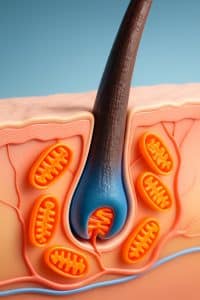 This molecular “gatekeeper,” embedded in the inner membrane of mitochondria, manages the transport of pyruvate—a key energy molecule—into the cell’s power-producing machinery.
While this discovery has wide-ranging implications for diseases like cancer and Parkinson’s, it may also offer a new approach to hair loss prevention and treatment.
Mitochondria are essential for cellular energy production, and hair follicle cells—especially during active growth—are among the body’s most energy-demanding. Understanding how pyruvate is metabolized may provide a new strategy for revitalizing follicles and supporting long-term hair health.
Fueling Hair Growth: Why Pyruvate Matters
Pyruvate is generated when cells metabolize glucose and serves as a vital input to mitochondria, where it’s converted into ATP—the energy currency of the cell. The MPC facilitates this transfer, enabling mitochondria to produce up to 15 times more energy from pyruvate than if it remained in the cytosol.
Hair follicles rely on this metabolic activity to fuel the anagen (growth) phase of the hair cycle. In individuals experiencing hair thinning or follicle miniaturization, mitochondrial function often deteriorates with age, reducing the energy available for healthy growth. Impaired pyruvate transport can reduce ATP synthesis, triggering dormancy and slower hair regeneration.
Could Blocking the Gate Unlock Hair Growth?
One of the study’s most surprising findings is that blocking the MPC may offer an unexpected benefit: a boost in lactate production. When pyruvate is prevented from entering the mitochondria, it is instead converted into lactate—a byproduct increasingly recognized for its role in stimulating hair follicle activity.
A 2017 study showed that higher lactate levels in skin tissue correlated with enhanced dermal papilla activity, a critical component of hair shaft development. The new research offers a visual blueprint for precisely where inhibitors can bind to the MPC and how they can shift metabolism toward this lactate-producing pathway.
This counterintuitive strategy could offer a metabolic detour that enhances follicular energy indirectly, bypassing the need for full mitochondrial engagement.
 Mapping the Gate: New Tools for Targeted Therapies
 Mapping the Gate: New Tools for Targeted Therapies
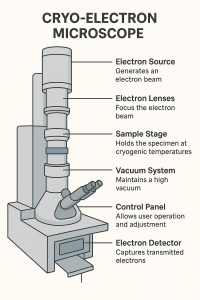
By using cryo-electron microscopy—a technique capable of magnifying cellular structures over 160,000 times—the Cambridge team mapped the MPC with atomic precision.
Professor Edmund Kunji, the study’s senior author, compared its function to a canal lock system, where selective gates usher pyruvate through mitochondrial membranes.
This detailed map opens the door to designing drugs that can selectively inhibit the MPC in target tissues like the scalp, while avoiding systemic interference. Such tissue-specific MPC inhibitors could safely boost lactate levels locally, triggering hair follicle stimulation without systemic side effects.
Rethinking Hair Loss Through a Metabolic Lens
Although MPC-targeted therapies are primarily being explored for chronic metabolic conditions, their potential in hair biology remains underappreciated. The perception of hair loss as a purely hormonal or cosmetic issue has hindered metabolic solutions from gaining traction.
This latest research, however, reframes the issue. Hair loss, particularly pattern baldness, may also reflect deeper inefficiencies in cellular energy pathways. With this shift in perspective, product developers may explore bioenergetic interventions as viable tools to restore follicular function.
Compounds like UK5099—an experimental MPC inhibitor—are already being studied in other contexts and could be reformulated for topical use in the scalp to stimulate lactate pathways.
Powering Up Hair Health: What This Means for the Future
Fifty years after its existence was first proposed, the mitochondrial pyruvate carrier is being spotlighted not only for its disease-modifying potential but also for its unexpected relevance to hair health.
As scientists continue to map the intricate links between cell metabolism and follicle vitality, the potential for targeted, non-hormonal, energy-based hair treatments is growing.
Rather than relying on conventional cosmetics or hormone-altering drugs, future solutions may focus on reprogramming follicular energy usage. By turning the keys of cellular energy metabolism, it may become possible to awaken dormant follicles and foster long-lasting growth in both men and women.
References:
- Sichrovsky, M. et al. (2025). Molecular basis of pyruvate transport and inhibition of the human mitochondrial pyruvate carrier. Science Advances.
- University of Cambridge Mitochondrial Biology Unit. News Release, April 2025.
- American Journal of Dermatological Research, 2017.
- Medical Research Council UK, 2025.