Blog
Embracing the Future

HAIRUWEAR Part 1
Things aren’t like they used to be. Yes, people still want to look good. In fact, they want to look better than ever before, but it’s a different kind of look. It’s not a cover up or an add on or make-over look, It’s the look of wellness. Men and women today are eating better, sleeping better and exercising better. Welcome to the organic, hydrated, selfie era.
Marketing in this fast-changing environment is no longer about making sales, it’s about making friends. To promote your brand or product you have to bring value to the relationship. So how do you connect with an image driven, selfie generation?
A smart place to start is by solving a problem; removing a source of discomfort. And few things are as discomforting as hair loss. Thinning hair is acutely personal and everyone experiences it differently. For some, it may be a lack of confidence in a social setting. For others it might be anxiety about a critical event like a date or an interview. Then there are the dreamers. People who follow fashion and celebrities. They are more likely to be drawn to evocative imagery and the world of imagination. To create aspirational campaigns for this audience requires a special kind of vision and imagination. The important thing is to understand your market – and to show you understand in a compelling way. That’s why The Authority wanted to talk with HairUWear, a company that has stayed in tune with the market over several generations of hair care customers.
HairUWear has been a pioneer in personal marketing and continues to set the pace. Maybe it is because the company’s CEO comes from an IT background. Or is it because the management team was assembled for its imagination? Whatever the reason, HairUWear is an undisputed leader in hair additions, wigs and extensions. In the men’s hair loss market, when other companies were promoting hair as a cover up, American Hairlines, a HairUWear company, told viewers that their hair was part of their wardrobe, part of how they presented themselves to the world; a fashion accessory. In the highly intimate women’s hair loss market, the company invited visitors to “Imagine” how hair could bring style and confidence and offered “Hair Like You” that would enhance their lives without changing them. As most other brands continued to talk about the product or the company, HairUWear bonded with its customers and made friends.
The Man Behind the Vision
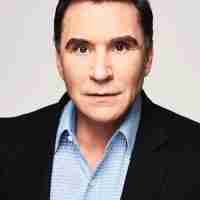
If Steve Jobs owes much of his success to his passion for design perfection, then HairUWear may owe its success to CEO, Michael Napolitano’s degree in mass communications.
[rml_read_more]
Michael later refined these skills working in computer sales and marketing until a unique and unexpected business opportunity came his way. His mother was working at the time at Eva Gabor International selling men’s hairpieces and the owners were ready to sell the company so they could focus all their attention on the women’s market. Pooling their resources, Michael, his mother and his wife, Denise seized the moment…and that is where, 40 years ago, the HairUWear adventure all began.
H. Authority:
In this interview we’d’ like to talk about the vision, the creativity, and the force behind HairUWear. How the company got to where it is, and how you assembled the team that shares your values. Today, it’s not about hair as a cover up, it’s about hair as lifestyle. And to succeed in that environment requires a different set of marketing skills.
Michael Napolitano
It’s not just skill. It’s also passion and commitment. I can’t even express how passionate I am about my company and the energy and imagination that goes into it.
You started in men’s hair additions and grew what was a very traditional business into a hip, modern company that meshes with today’s lifestyles.
 It was a very long journey. I did not come from this industry. When I started out, I had a degree in journalism, but what you major in is not always what you end up doing later in life. My career started in mass communications, but then I had an opportunity to get involved in the computer industry, which was a 180-degree change of direction. I’d been producing work at ABC, for ‘Good Morning America,’ which probably sounds very sexy, but I wasn’t really getting paid that much money and it’s a pretty ruthless business. So, when I was presented with the computer opening, I grabbed it. This was the late 70s and the IT market was just starting to emerge. The computer systems were monsters; million-dollar installations. They were interviewing people for marketing and sales positions by the hundreds just to get one candidate and I was lucky enough to get chosen. I was put into an intense management training position for a year. Think of it as an MBA with a computer technology twist and it became a business launchpad for me. Once that was completed, I was put out in the field and here I am, twenty-seven years old, dealing with all these presidents and vice presidents of Fortune 500 companies, building computer systems for them.
 Now, while I am doing this my mother is working at Eva Gabor. The company originally only sold women’s wigs, but they decided to expand into men’s hair replacement and put my mother in charge. Shortly after, management decided this was not a good fit for the company and decided to go back to the women’s market. With the men’s operation now up for grabs, my mother approached me and said this is a great opportunity, how about going into business together? Now I was doing well in my own career so I told her I didn’t want to give that up. Anyway, long story short, she talked me into giving it a try for one year and my employers agreed to take me back after I got the new hair business up and running. I confidently expected to return to the computer field. But of course, that ever happened.
The hair business wasn’t an easy start up. I was a fish out of water and went through a major culture shock. One day I was in boardrooms of Fortune 500 companies and the next day I’m trying to sell a barber hair pieces. I had no marketing team, it was just me, my mother and my wife. That was it. But I put my training to work and did the best I could. I went on the road and met our customers and began a personal metamorphosis. We created new marketing programs and slowly the business began to grow, but it still wasn’t the kind of business I dreamed about.
When did things begin to change?
I wanted to create a company that could hold its own within the professional beauty industry. And little by little, we accomplished that. The Eva Gabor company had gone through a lot of things like leveraged buyouts and it ended up in in a basket of companies owned by Cargill Industries, which has zero to do with anything beauty. Cargill is all about financing grain, steel and food products and Eva Gabor was not a good fit for them. When we asked Cargill about a possible acquisition their attorneys were pretty tough, but I was used to working with every level of management and we got through the negotiations and I acquired the company in 1996. At that time, it was still a little old lady’s wig company, but I wanted to build on that foundation and create an expanded portfolio. I had to lay the train tracks before I could build the train.

Our first challenge was to create a hairpiece line that was attractive and aspirational. So, we did surveys to see who women looked up to and the top person was always Raquel Welch. We reached out to her management and, long story short, we created the Raquel Welch signature line in 1997. If we fast forward to today, I don’t have to tell you that this collection has now become a huge global brand. We did some magnificent video and photo shoots that look like they came from a movie set! With this kind of inspirational marketing, Raquel just took off! It was unbelievable.
You started with classic marketing; consumer surveys and role model research. But somewhere along the way, this turned into a passion. Were you aware of that happening?
The original mission was to create a well-respected new beauty company. And in order to do that, we had to create a powerful image that had wide appeal to women. That’s why I spent the money on the surveys. I felt my competitors were just throwing darts. There was no intelligence or creativity behind it. I knew that in order to build a beauty brand we needed creativity and aspiration. We wanted to create a brand that not only attracted people who were experiencing hair loss, but also create products that would become true beauty accessories. For example, what about the women who plans to go to a special event and wants to look amazing. She doesn’t suffer from hair loss, but she may have fine hair and can’t get the style she wants. That was kind of the code that I wanted to crack and so we worked at it with Raquel and both parts of the business started to really grow.
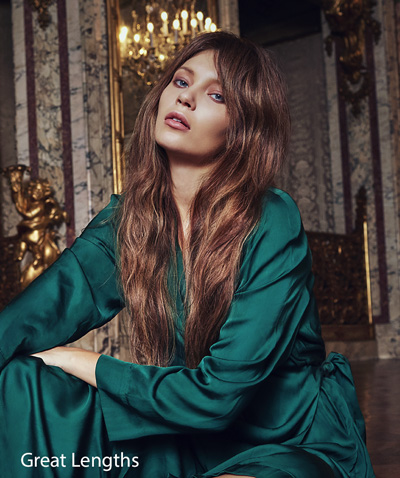 Shortly after, I had the opportunity to bring Great Lengths into the United States. It is now a dynamic hair extension division, but in 1998 it didn’t exist. In those days, hair extensions were a black girls’ service. There was no branded, education-based program hair extension company. I first became aware of the potential of the extension market when I saw a model with this awesome long hair at a hair show in Berlin. She was standing by a booth with a guy singing songs and playing music with a little box speaker. I’m wondering what the heck this all is, so I introduce myself; and that’s how I meet David Gold, the man who created the extensions that became Great Lengths. I studied the product and realized this could be the next big boom back home, so, when I returned, I told my team I’d seen something I really believed in and the results overseas were really great. I explained that these hair extensions were the answer for every woman who goes into a salon and asks for a special style only to be told, “your hair is to fine” or too “flimsy” and you need more density or more length.
They thought I was nuts. They thought it was going to crash and burn and that I was going to kill the company. I told them that we’re going to build another division and it’s going to be great. But they insisted, “This is not our business. It’s going to take away from our regular Eva Gabor line.” And I replied, “This is going to be big in the salon industry. Everybody’s got to suck it up, and we’re going to make it happen!” So, we went ahead, but rather than going it alone, I thought, why not partner? And that’s what we did. We created a plan that went beyond selling hair. We offered education. Without education, the hair is meaningless. So, we built an education team and did all the marketing. We had a partner who was making the product, but we did everything else ourselves.
The first thing that I wanted to do after education was to really Wow the industry and the consumer! So, we ran full page ads in In-Style magazine, Elle and other publications. Clients started showing the ads and photos to their stylists, telling them, “Look at the before, look at the after… can you do this?” Most salons will tell you that’s how they gained most of their new clients. We gave them an advertising vehicle that drove consumers into the salon. Then the word started to spread, as those consumers started telling their friends about us. It was like a snowball.
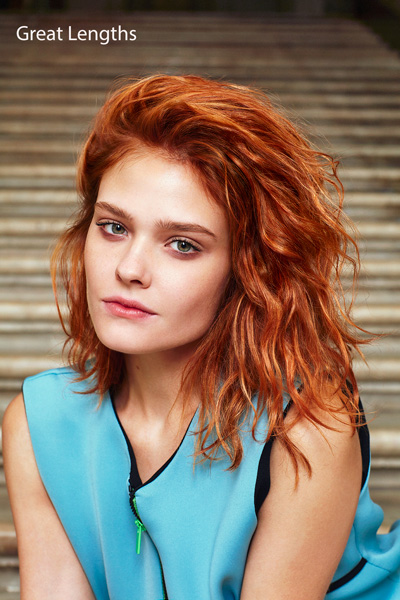
To maintain that high level of satisfaction, we continued to educate and built a network of 7,000 certified studios. And, of course, we continued to invest heavily in trade marketing. In fact, we spend more money than any major beauty brand for professionals. We also had a great PR company that got us tremendous publicity. We would do PR events in New York City and invite 50 – 60 beauty editors. We were written up in every magazine. There also used to be a TV program called “Greatest Cities of The World” where they would show amazing products and places where celebrities would hang out. In one episode, they showed clips of Rodeo Drive and stars wearing Great Lengths. This was a huge hit for us, and Great Lengths Extensions were ranked number 35 among the greatest things in the world! Salons went ballistic! Phone calls were coming in like mad. Everybody started noticing what we were doing, but the beauty of it was when I started, I didn’t have any competitors. It was just us.
How did you find people with the same vision to join the team?
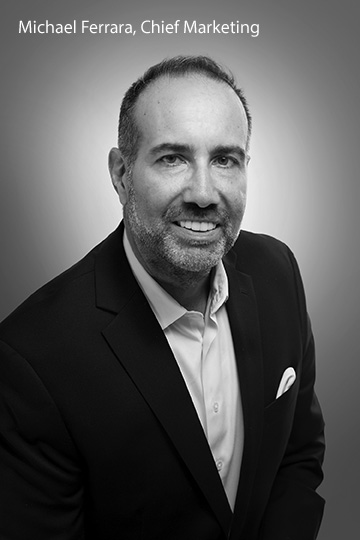 When I bring team members into the company, I want to people who are smarter than me. There are a lot of people who want their business to be kingdom; it’s their way or no way. I wanted to reverse that. So, we brought in brilliant hairdressers and professionals who had done tremendous editorial, fashion and photo work. And we sought out the top educators in the professional beauty industry. Our Executive Director of Creative is the 2018 AHA Hairdresser of the Year for all of North America. These are the kind of people we have. When you put that kind of team together, you not only have a vision for the hair itself, but a deep understanding of the needs of the salons, stylists and the consumer. But beyond that, my executive team shares my vision because they come from beauty; they’re not stuck in a box. Like I told you earlier, when I came back from Berlin, people said you can’t do that? That’s the one thing I don’t want. I want people around me who are ready, able and passionate about breaking the barriers? I now have that kind of team. Take Mike Ferrara for example. Here’s someone who’s incredibly accomplished and has advocated for large companies and was ready for a challenge. Reality is we’re not a Coty or a L’Oréal. We’re not a $10 billion company with layers and layers of people where you can get lost. We’re scrappy group and we all collaborate together, regardless of title.
How do you stay alongside the consumer in a fast-changing market?
What we do is fashion, so, we’ve got to parallel that. The pace of change continues to accelerate, but we’re successful because of our ability to stay ahead of trends and sometimes even be the creators of change. Take Great Lengths hair extensions. We created a mainstream service in the salon industry that did not exist. Of course, we now have thousands of competitors, but we paved the way. Innovation is part of our culture and I constantly preach that innovation is the key to staying on top. How do we do that? We attend all the major shows worldwide. At CosmoProf Bologna we participate not only as an exhibitor, we take a team of about 30 people so they can get involved in everything going on with all the different companies and hear what that they have to say. We also subscribe to many trend services that exists in the fashion industry and closely monitor all the major fashion shows.
You don’t only follow the media; you are part of the media. You are in Hollywood movies and you were part of Legally Blonde, you are a regular part of popular TV shows.
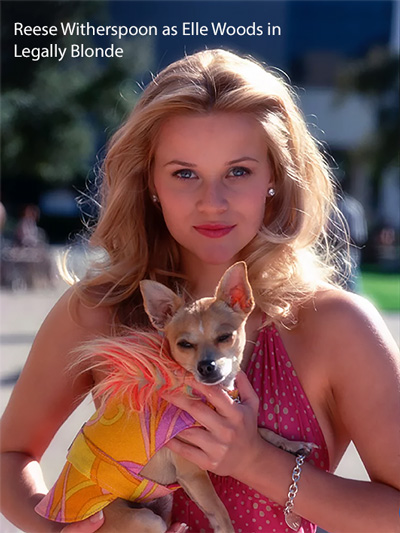 ‘Legally Blonde’ was a great experience. We provided hair for the movie and for the premiere party in Hollywood, they created a special exhibit and we sent a team of a dozen hairdressers to do the hair of all the hostesses. There were probably 100 of them. I mean, it was massive party. We put Raquel wigs on them and they’re walking around and looking glamorous everybody sees them and start converging on the exhibit. David Hasselhoff comes over to me and says, “So, Raquel’s in the hair business, can I get some wigs for my family?” That’s just one example of what was happening. It was crazy! Our products are part of a lot of shows and movies. A year ago, we were in LA helping Rachel Zoe with her Spring fashion show. Our artistic team went to LA and did the hair for all the models, including Rachel. We did all the styling with our vision. It was Great Lengths of course.
We stay on top the trends because of great people and our involvement in the right places.