Blog
Bond-Strengthening Biotechnology

How Molecular Science Is Re‑Engineering Hair Care — and What It Means for Hair Replacement Solutions
The Quiet Revolution in Hair Strength
For much of the modern hair‑care era, innovation focused on improving how hair looked and felt on the surface. Conditioners smoothed cuticles, silicones enhanced shine, and styling polymers improved manageability. These approaches delivered visible benefits, but they rarely altered the underlying structural integrity of the hair fiber itself. That paradigm has now shifted decisively. Today’s most consequential breakthroughs are occurring at the molecular level, reshaping how scientists, clinicians, and professionals think about hair damage, repair, aging, and long‑term resilience.
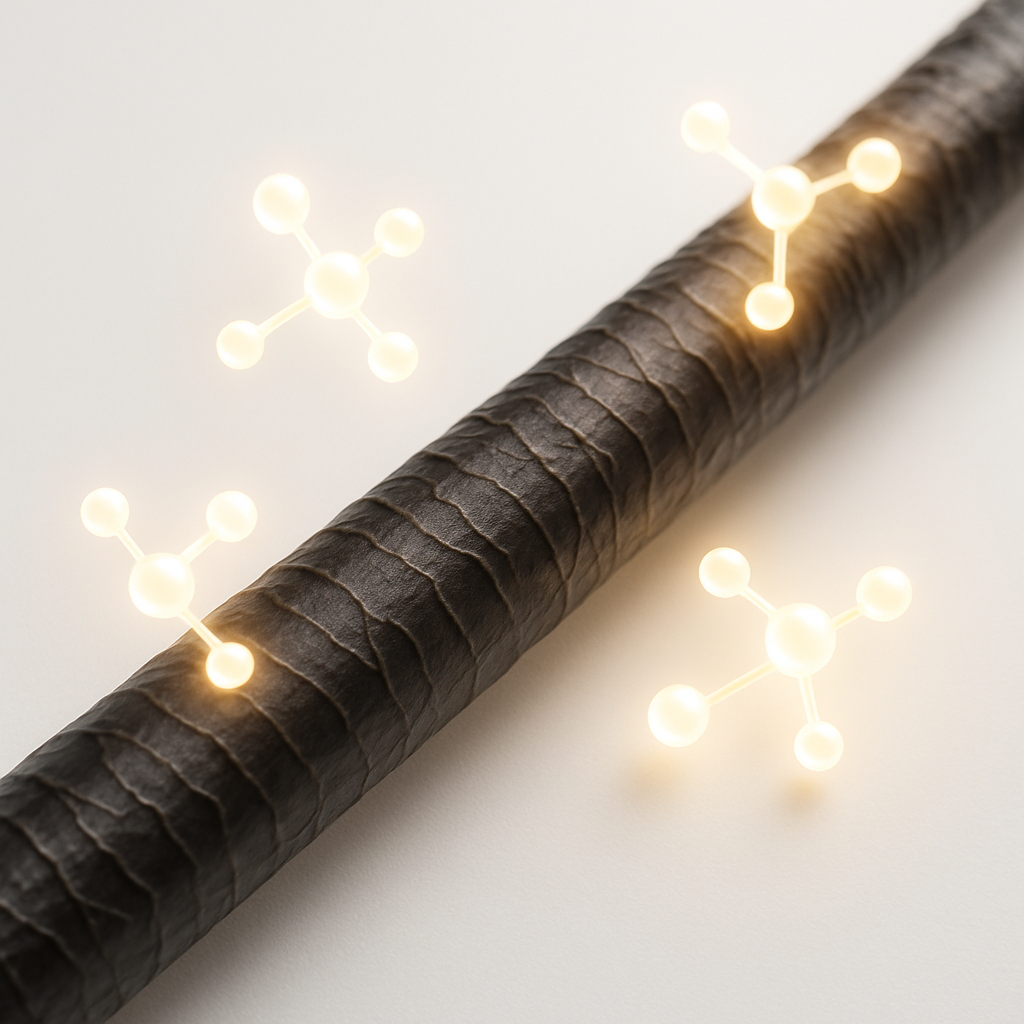 The emergence of bond strengthening biotechnology marked the beginning of this transition. Early innovations concentrated on reinforcing or reconnecting damaged disulfide bonds within the hair cortex—an essential determinant of tensile strength and elasticity. Since then, the science has expanded rapidly. Current research now encompasses biomimetic keratin peptides, precision‑engineered molecular actives, proteomic mapping of fiber degradation, and fatigue‑resistance testing that better reflects real‑world wear. Together, these advances are redefining what “repair” means in cosmetic hair care.
Importantly, this shift is not limited to natural hair. The same scientific principles are increasingly relevant to extensions, wigs, toppers, and hybrid hair‑replacement systems, where fiber longevity, strength, and realistic movement are central to both aesthetic and economic value.
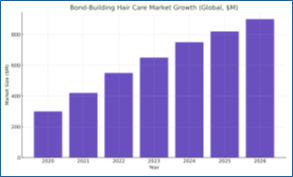 Industry analysts estimate the global bond strengthening biotechnology now exceeds $800 million in annual sales and continues to grow at double‑digit rates. This expansion is being driven by consumers who demand demonstrable performance, professionals who require predictable service outcomes, and brands under pressure to deliver sustainability alongside efficacy. The result is a quiet but profound revolution in hair science—one that carries meaningful implications for hair‑replacement professionals.
Understanding Hair Bonds and Structural Integrity
Human hair is a remarkably complex biological composite. Its strength and flexibility derive primarily from keratin proteins organized into a hierarchical structure. Several types of chemical bonds contribute to this architecture, each playing a distinct role.
Disulfide bonds, formed between sulfur‑containing amino acids, provide much of hair’s permanent strength and shape. Hydrogen bonds are weaker but numerous, allowing hair to respond dynamically to moisture and styling. Ionic, or salt, bonds help stabilize protein arrangements, while peptide bonds form the backbone linking amino acids into long keratin chains.
 Daily life places cumulative stress on all of these bonds. Chemical coloring, bleaching, relaxing, and perming disrupt disulfide bridges. Heat styling weakens hydrogen bonds. UV exposure, environmental pollution, friction from grooming, and the natural aging process gradually degrade peptide structures. Historically, cosmetic products compensated by coating damaged fibers, improving feel and appearance without addressing internal weakness.
Modern bond‑strengthening formulations take a different approach. Leveraging advances in proteomics, high‑resolution imaging, and amino‑acid sequencing, formulators can now target internal damage sites with far greater precision. This has allowed the industry to move beyond surface camouflage toward true structural reinforcement.
From Cosmetic Conditioning to Bio‑Precision Repair
Contemporary bond‑building technologies fall into several overlapping scientific categories, each reflecting a different strategy for reinforcing hair fiber integrity. Rebonding molecules aim to reconnect broken disulfide bonds or create functional analogues that restore mechanical strength. Biomimetic peptides are engineered to resemble fragments of native keratin, allowing them to bind selectively to damaged regions within the cortex. Crosslinking agents introduce new supportive connections between protein chains, enhancing cohesion and fatigue resistance.
| Technology Type | Example Mechanism |
| Rebonding molecules | Reconnect broken disulfide bonds |
| Biomimetic peptides | Target damage sites with precision binding |
| Crosslinking agents | Create new supportive bonds between proteins |
| Nano-delivery lipids | Transport actives deeper into cortex |
| Proteomic-derived keratins | Replicate native keratin for biological compatibility |
Equally important are advances in delivery systems. Nano‑structured lipids and carrier molecules improve penetration, ensuring that actives reach the cortex rather than remaining on the cuticle surface. Proteomic‑derived keratins, produced through biotechnology rather than traditional animal sources, offer greater consistency and biological compatibility.
The shift from vague “strengthening” claims to validated performance metrics marks a critical maturation of the category. Suppliers increasingly rely on fatigue‑resistance testing, peptide‑binding assays, and micro‑scanning techniques to demonstrate efficacy. These methods reveal how hair performs under repeated stress, rather than under a single pull to failure.
Recent developments from major ingredient suppliers illustrate this trend. Biotechnology‑derived keratin systems, designed to replicate the amino‑acid profile of human hair, have shown superior performance in internal comparative testing against both conventional keratin and earlier bond‑building technologies. While these results remain largely within supplier‑validated frameworks, they signal a broader industry movement toward evidence‑based molecular repair.
Biotechnology and Sustainability: A Converging Imperative
Traditional keratin ingredients are typically sourced from wool or feathers—materials that are effective but inefficient and increasingly scrutinized from a sustainability perspective. Biotechnology offers an alternative pathway. Through fermentation and recombinant protein synthesis, manufacturers can produce keratin‑like peptides with high purity and reproducibility, without reliance on animal by‑products.
Biomimetic plant‑derived actives and precision amino‑acid engineering further enhance this approach. These methods allow formulators to tailor molecular size, charge, and binding behavior, optimizing interaction with specific hair types and damage profiles. At the same time, they reduce variability, improve scalability, and lower the environmental footprint of production.
This convergence of sustainability and precision matters particularly for populations with heightened hair fragility. Individuals with textured hair, chemically treated hair, or age‑related thinning often experience compounded stress, where breakage occurs before shedding. Biotech‑engineered actives offer the potential to support fiber durability in these high‑risk contexts without introducing harsh chemistries.
Fatigue Resistance as a New Clinical Benchmark
One of the most significant conceptual shifts in hair science has been the recognition that breakage is rarely the result of a single catastrophic event. Instead, it reflects cumulative fatigue. Traditional tensile tests, which measure the force required to break a fiber in one pull, fail to capture this reality.
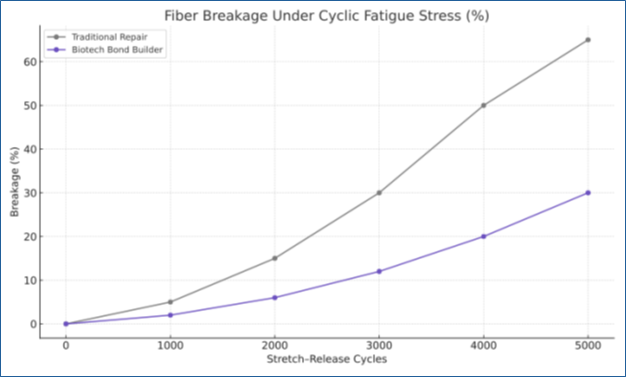
Cyclic fatigue testing addresses this limitation by repeatedly stretching and releasing hair fibers to simulate grooming, washing, and styling over time. Data from these tests often reveal structural weakness long before visible breakage occurs. This helps explain why consumers frequently report sudden fragility after years of chemical or thermal wear.
Biomimetic peptides and advanced keratin systems tend to perform better under fatigue conditions, suggesting that they reinforce hair in a manner more aligned with its natural load‑bearing behavior. For professionals, this distinction is critical. Products that merely increase initial tensile strength may offer short‑term benefits, while those that improve fatigue resistance contribute to long‑term hair preservation.
Implications for Thinning Hair and Aging Populations
Thinning hair magnifies the consequences of structural damage. As fiber diameter decreases, each styling or chemical event imposes proportionally greater stress. The industry is witnessing a rise in breakage‑induced thinning among younger consumers, alongside older men and women delaying color services due to fragility concerns.
While bond‑strengthening technologies are not medical treatments and make no claims regarding hair growth, they may play a meaningful role in cosmetic resilience. By improving fiber durability, these systems can help individuals retain length and density for longer, delaying the visible progression of thinning. This aligns with broader trends toward hair longevity management, paralleling anti‑aging strategies long established in skincare.
Professional and Clinical Perspectives
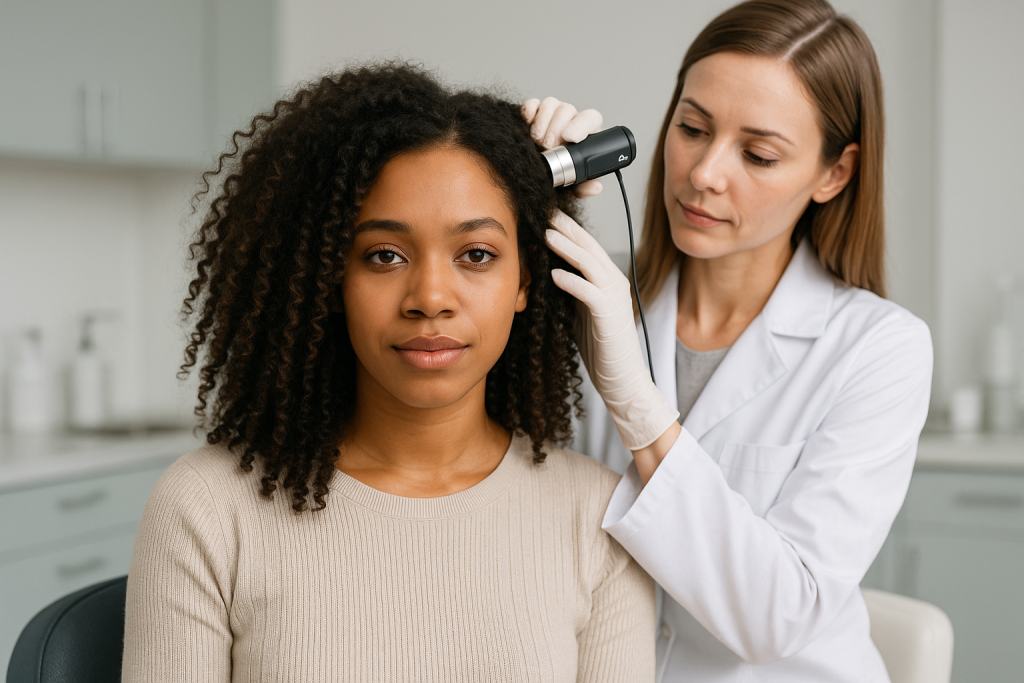 Dermatologists and trichologists increasingly assess hair fiber integrity alongside scalp health. In clinical settings, practitioners report growing demand for pre‑service strengthening protocols, particularly prior to coloring, extension application, keratin straightening, or hair system bonding.
Several trichology clinics have noted improved service outcomes when molecular repair products are incorporated into pre‑ and post‑treatment regimens. Clients undergoing long‑term density stress—whether from styling practices, medical conditions, or aging—appear to benefit most from consistent use of fatigue‑resistant formulations.
For hair‑replacement professionals, this integrated approach underscores the importance of treating natural hair, scalp, and replacement fibers as parts of a single system rather than isolated components.
Consumer Drivers Behind Bond‑Technology Adoption
| Driver | Evidence |
| Visible repair performance | Modern consumer rejects “cosmetic only” claims |
| Scalp + strand wellness movement | Convergence of dermatology, trichology & salon services |
| Clean biotechnology | Strong shift away from harsh chemical proteins |
Three primary forces are driving sustained demand for bond‑strengthening solutions. First is the expectation of visible, measurable repair. Modern consumers are increasingly skeptical of purely cosmetic claims and seek products that demonstrate structural benefit. Second is the convergence of scalp and strand wellness, reflecting the influence of dermatology and trichology on mainstream beauty culture. Third is the shift toward clean biotechnology, as consumers move away from harsh chemical proteins in favor of precision‑engineered alternatives.
Together, these drivers position bond‑building technologies as foundational tools in hair longevity management rather than optional enhancements.
Personalization and the Next Phase of Bond Care
Proteomics and AI‑assisted ingredient screening are enabling a new level of customization in hair repair. Formulations can now be adapted to hair type, damage etiology, porosity, ethnic biology, and environmental exposure. Early salon pilots have introduced damage‑mapping consultations, pre‑color peptide primers, and post‑service sealing treatments tailored to individual profiles.
As these tools mature, personalization is likely to become a defining feature of professional hair‑care services, including those associated with hair replacement.
Implications for Hair Replacement, Extensions, and Wigs
The relevance of bond‑strengthening science extends well beyond natural hair. Stronger biological hair may delay the transition to full hair systems, supporting hybrid solutions where natural hair blends with toppers or partial replacements. This shift does not reduce demand for hair systems; rather, it reframes them as part of a continuum of care.
 For extensions and wefts, improved fiber strength can reduce shedding, mid‑shaft breakage, and tension‑related damage. Molecular strengthening before and during wear may improve installation longevity and minimize trauma during removal.
In wigs and premium hairpieces, biotech‑derived keratin and peptide systems offer the potential to extend usable life by protecting processed fibers from fatigue, dryness, and matting. These benefits have direct economic implications for both providers and clients.
Bond‑repair science also intersects with advances in adhesive comfort and scalp barrier protection. Future products may simultaneously strengthen fibers, support scalp moisture, and reduce stress during system removal, enhancing both safety and satisfaction.
Preparing for a More Integrated Future
Professionals across hair care and replacement disciplines can take several proactive steps. Educating clients on the distinction between cosmetic coating and molecular repair builds trust and sets realistic expectations. Developing structured bond‑repair protocols—before, during, and after services—improves consistency and outcomes. Partnering with suppliers that provide transparent performance data and biotechnology sourcing strengthens credibility.
Above all, monitoring the interface between hair, scalp, and replacement systems reinforces a holistic model of care.
Strength, Longevity, and the Evolution of Hair Management
Bond‑strengthening biotechnology represents more than a product trend. It reflects a deeper transformation in how the industry understands hair resilience, aging, and sustainability. By moving beyond surface beautification toward bio‑engineered durability, these technologies offer the promise of longer‑lasting fibers, reduced breakage‑driven thinning, and more sustainable hair‑replacement solutions.
The future of hair management lies between cosmetic artistry and biological science. Professionals who embrace this integrated perspective will be best positioned to meet evolving expectations and to guide clients through a new era of hair longevity.