Blog
Stylist Wins a Rolls Royce!


Here’s how Brenda did it
Brenda Knox works with clients in the entertainment industry, consults for product manufacturers and is much in demand as an industry educator. Her innovative and creative hair designs have garnered worldwide recognition. She demonstrates a Picasso-like flair with her creative use of color and penchant for using abstract designed hairpieces to create bold, unforgettable works of hair art. She has won top awards in national and international competitions including the Olympic Hair World championship, the Mondial Coiffures Competition in Paris, France and the Pivot Point International in Shanghai, China.

Hair Authority:Before meeting with you Brenda, we scrolled through your resume and have to say that we were impressed by what we saw. You’ve traveled the world, won multiple competitions and worked with famous celebrities. But outside of this world of glamor, you also like to give back and help people with special needs. How you balance your professional life and divide yourself between the excitement of the runway and the work you do with cancer patients?
BK: It’s all part of a life that I enjoy and find fulfilling. I like doing runway productions, photo shoots and shows because I’m able to create and express gorgeous looks for women whether they have a head full of hair or hair loss. It excites me to add color in my creations. I love seeing dimensions of color flowing with highlights. It attracts the eye. I help women to design for their outer beauty, so it reflects their inner beauty as well. Women with cancer go through stages of losing their hair, but as a Hair Replacement Specialist I create personalized styles to help restore their confidence and beauty.
[rml_read_more]
HA: You are a legend in the hair industry. What made you decide to make a career in hair?
BK: Yes, throughout my career I’ve traveled and educated others on hair designing, hair care and produced shows. Now my intention is to help fulfill a need for hair loss clients. My ex father-in-law and legendary stylist, Mr. Thomas Hayden, was the first American to win a gold medal in the European World Championship competition. Training under him helped me to realize the gift I have in designing hair.
HA: So, from an early age, you knew this was what you wanted to do?
BK: No. I started doing hair at a really young age. My mother had 11 children. As the eldest, I was responsible for combing the hair of my five sisters’ hair that were my practice models. I really wanted to be a physical therapist, but opportunities opened up and I discovered my gift for designing hair.
HA: My wife is a cosmetologist also, so I became her trial client. Everything she wanted to explore, she tried on me first.
BK: That’s right, it all starts in the family! In my case, it was a natural progression. I just followed Mr. Hayden. I watched him comb and was amazed by what he did. I was lucky to be able to follow in his footsteps.
HA: And then, of course, you got involved in platform work and entered major competitions. A lot of people don’t like the limelight; was it easy to go on stage and be judged in public?
BK: No, it was not easy to do. I had to develop combing in front of people. I did have the jitters. Combing hair became exciting, and, in the competitions, they were giving out big prizes worth $50,000.00 and even Rolls Royces! Really great prizes compared with what they’re doing today.
HA: Where was your first competition?
BK: It was in California. I won the California Hairdresser of the Year twice presented by the California Cosmetology Association. It was my proudest moment. I was overwhelmed when the fully packed room stood up and applauded.
HA: Was the Rolls for real? Tell us about the Rolls Royce.
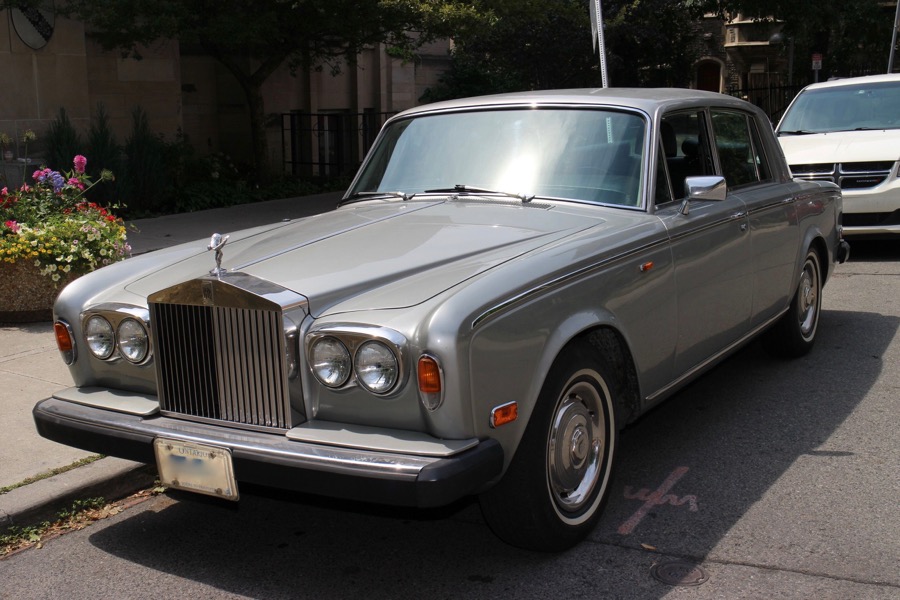
BK: Yes, it was. The competition was held in New Orleans and was by sponsored by the Beauty Classic hair company. My mentor and trainer told me to pray and meditate before the competition. I prayed and thanked God for the Rolls Royce in advance and I won. This was a special moment because my grandmother was there to share it with me. I could see her smiling in the audience and I knew she was happy and proud.
HA: Tell us what happened. So, you win the competition and they say, “Congratulations, you’ve won a Rolls Royce,” then what do they do? Do they give you the keys right away… drive the car up on stage…? What happened?
BK: I was presented with the keys in hands that night.
HA: What color was it?
BK: It was a brown silver shadow.
HA: How long did you keep it?
BK: I only kept if for three years because it became a very expensive to maintain.
HA: What did you do when you first took it home? Did you have a garage big enough for a Rolls Royce? Did you park it on the street?
BK: It fit in the garage.
HA: And when you took it out, was it just for special occasions?
BK: Yes, Sunday drives with my daughter Breon. It was a car I will never forget.
HA: Have you got a photograph of it?
BK: Yes, I do. I think I might have sent you a picture. If not, I will.
HA: What other prizes and awards have you received?
BK: I received money, crystals, medals and beautiful trophies. I traveled internationally and went to places like China and Paris. I never realized how glamorous competitive hair styling could be until I began to travel, seeing different people and cultures and how beautiful the women were. It was an exciting time.
The talent and imagination of Brenda Knox
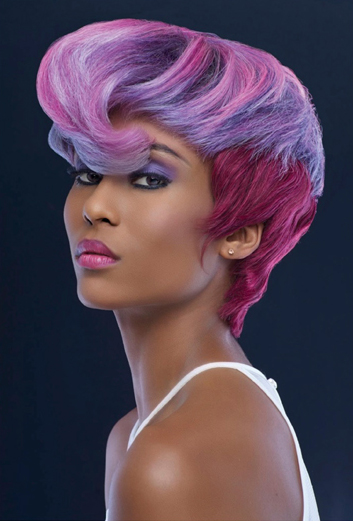
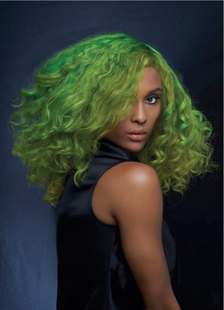

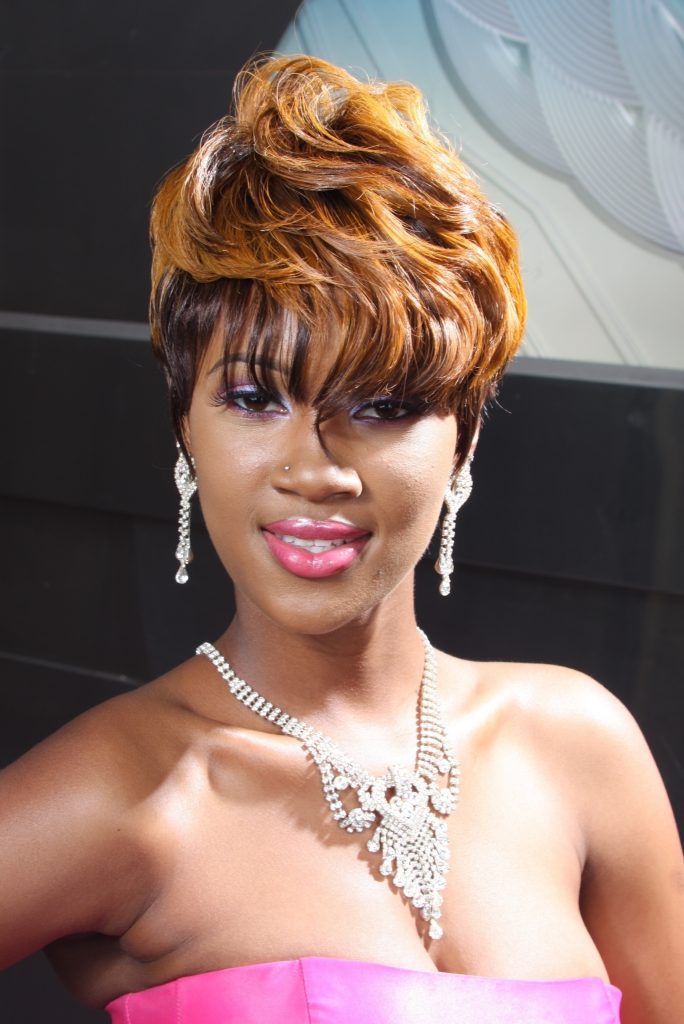

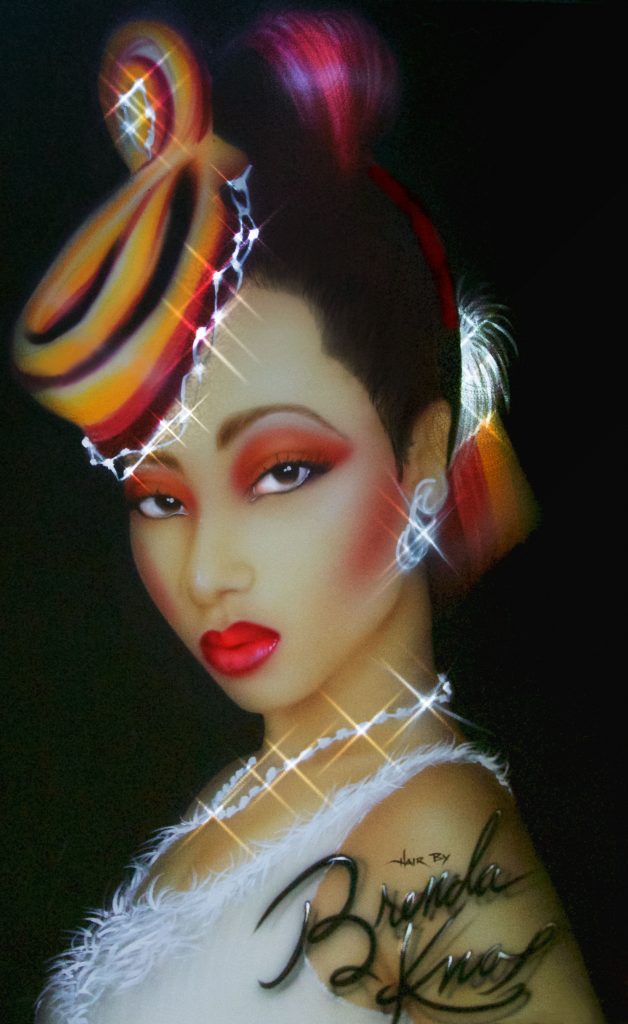


HA: Do you have a special style, so if somebody saw your work, they would say, “Ah ha. That’s Brenda Knox?”
BK: Yes, I do have a line that I really like. It’s a heart shaped design. And I especially like artistic looks for weddings. I like to make a woman look different. I deal with a clientele that likes glam, but I also deal with hair loss. You can still look good and have hair loss.
HA: Are you seeing more and more clients suffering from thinning hair these days?
BK: Yes, hair loss can be a genetic disorder with underlying problems caused by hyperhidrosis. It can also result from physical damage caused by non-professionals improperly braiding the hair or misapplying chemical treatments that can destroy the hair follicle.
HA: When you say, ‘improper braiding,’ what’s going on?
BK: If the hair is pulled too tight, or there are too many rubber bands pulling the hair, you’re doing long-term damage. That kind of hair loss is likely to be permanent. A lot of people are not aware of this. If you have an African American child, I would prefer that child to wear natural hair rather than have rubber bands all over because you’re killing the hair follicle.
HA: What is the correct way to braid without suffering from traction alopecia?
BK: There is a way to braid the hair without tension, but people have to be taught how to braid without pulling the hair. It’s a technique that has to be demonstrated. You should always be able to put a finger underneath your braid. If you can’t do that, your braid is too tight.
HA: But isn’t the whole point of a braid to have it tight with your hair pulled back? Isn’t that the look that people want?
BK: No. You wear braids to easily control your hair, not to pull your hair out. Once you pull your hair out, you start getting bumps and the scalp starts to bleed. That’s when you know you have a problem. When that happens, you should take that hair down immediately – but people don’t, they just go about letting their head hurt. That’s the problem. People don’t stop even when they’re in pain.
HA: Is this a widespread problem?
BK: Yes. I see women who are losing their natural hairline just through braiding.
HA: You also mentioned the risks from using chemicals on the head?
BK: There are multiple risks – ranging fromimproper procedures to failing to protect the scalp to over processing the hair, causing it to break and to dry. Clients should seek professional advice from those that have been trained and educated in proper techniques and procedures in applying chemical treatments.
HA: Women want to take care of their hair at home to save time and money and they’re being told that they can do things like color and straighten safely at home. But as you point out, that comes with some major risks.
BK: Yes. There are some things you can do at home like shampooing and conditioning, but I wouldn’t recommend anything that involves a chemical treatment like a relaxer. Women who copy what they see on YouTube without professional guidance can damage their own hair
HA: When we talked earlier, I mentioned the excitement we see at the Bronner Brothers event every year. There are fabulous design and colorful creations and we see some of that in the pictures you’ve been kind enough to share with us. But that glamour comes at a price doesn’t it – not only in terms of the products you have to buy, but the health risks that go with them.
BK: Yes, glamour does come at a price, but the health risks are minimized by professional application and techniques. Most of the pictures you see are hair units that are made off the head. Bronner Brothers is the largest Black show in the United States. They promote the largest Avant Garde and Fantasy looks in the United States. Color, relaxers and creativity are hallmark techniques used to achieve those fabulous looks for show work only. Hair care is for everyday wear, which causes no health risks.
HA: Right. Tell us about the work that you do with the Cancer Society.
BK: It is a both a pleasure and a privilege to helpcancer clients who are suffering from hair loss. I always start with a consultation so I can understand their real needs. Clients will open up to me about their problems, which I help to resolve with hair replacement or other devices.
HA: Many of our readers are stylists with an African American clientele and they may be making some of the mistakes you’ve been talking about. Is there any one technique or tip you would like to share with them in this interview about how to braid, color, straighten or style?
HA: What products should they use and what products should be avoided?
BK: I always try to find a product that’s organic. I can’t say what brand I use because I don’t want to use this discussion to advertise. I learned early on that when I give people products, I’m endorsing a company and I don’t do that.
HA: You have a wealth of experience. How can you share and pass on what you have learned?
BK: I often hold hair replacement classes with Edmarie Masters, a noted hair replacement specialist and Erkkie Harris-Wells, an internationally trained trichologist. We want to help people who are serious about getting into the hair replacement industry. This is not something you learn in a day. I’ve developed my skills through years of experience. I’ve had my ups and downs like every other professional. There are no shortcuts.
HA: Where can people learn about these upcoming classes?
BK: Classes are posted on my website BrendaKnoxBeauty.com, Facebook or at (310) 872-9144.
HA: Brenda, is there anything you’d really like to share with our readers that we haven’t asked you about?
BK: The hair replacement industry is growing. As the population ages and people undergo treatment for various illnesses, the hair loss industry is a wide-open market. There are new opportunities for stylists who want to expand their clientele. People want to look good even when they don’t feel good.
HA: African American women spend more to look good, more on their hair and personal care, than Caucasians, Hispanics, Asians, or any other group. Why is that?
BK: Caucasian hair is straight; black hair is curly. For African-Americans, if you want to define a special look, you have to really work with it to get what you want. It’s a longer process. It may take a flat iron, or a straightening comb and you have to know the right tools and procedures to get the style or texture the client wants. And remember, your creation is only temporary, so they have to keep coming back and doing it over to maintain the look.
HA: What are yourthoughts about wearing your hair straight or curly and natural? When first lady, Michelle Obama was in the White House, she wore her hair straight because that was the traditional thing to do. But now she’s back leading a normal domestic life, she’s letting her hair return to its natural tight curls and she still looks absolutely fabulous. Do you think a lot of African-American women are trapped into straightening their hair to look “professional” when this really isn’t necessary?
BK: This depends on the woman. It’s nice for a black woman to wear her hair natural if she enjoys it and it looks good on her. It’s all about choices. If she goes to an avant-garde affair and wants straight hair, she has that ability to do that so. She has multiple choices. Her lifestyle dictates what she can do. If she were running and doing sports, I would definitely go with the natural look because she’s able to shampoo and condition quickly and easily. If something special comes along and she wants to look glamorous, she can always go see a professional.
HA: Caucasians, particularly musicians, who braid their hair and imitate African-American hairstyles are criticized for not sticking to their own culture. Why is this?
BK: African Americans have contributed so much to American style and culture and received so little in return. Some people feel that hair styling is the last thing that is uniquely ours. A few people get offended at cultural borrowers believing that even our hair is usurped or borrowed. Frankly I see it as a compliment. I believe we often influence each other and people should be able to borrow any style from each other they wish. Hair is personal, so be creative. They can braid it, shave it, whatever. I braided a white lady’s hair recently and it looked really nice.
HA: Bo Derek looked very attractive with braided hair also.
BK: Yes, and I see a lot of Latina girls wearing braids as well. Braids started in Africa and now it’s a worldwide trend. People borrow from each other and make things their own.
HA: How do you find those “safe” products? You said you look for products that are natural, organic and don’t contain harmful chemicals. What are the things to look for on the labels?
BK: Mostly products that are not highly alkaline. Why do some conditioners contain sodium hydroxide for example? It’s going to weaken and dry the hair out. So, there are certain things to look out for, especially when you’re dealing with black hair. You want something that has more oil content, more moisture to balance the hair and help detangle.
HA: We’dlike to finish on a fun note and ask you to talk about most exciting moments in your career and some of the celebrities you met. Are there any stories you can share with us about working with people whose names we may recognize?
BK: I’ve worked with many famous artists like Patty Austin, Luther Vandross, Anita Baker, and many more. The most prominent show I did was working with Beyoncé’s band with Kim Kimble for the Grammy’s. I enjoyed that production and other shows because of the creativity. My message to young artists who want to be part of events like this is, “Stay Inspired.” Stay with your craft, stay with your art. You can do anything you want; just get the right training and take yourself to the right doors.
HA: How do the studios or celebrities find people like you?
BK: They can find me through my website, word of mouth and magazines. There are a couple of people I would like to work with, Angela Bassett and Kerry Washington. I would like to create new styles with them for the Oscars. A lot of my work with colors and hairpieces has been published in Europe. It shows the sort of look I create.
HA: Do high visibility stylists like yourself have agents?
BK: Yes, I am seeking one now.
HA: Let’s talk about styles in the year ahead. Are there particular styles you see coming back into fashion, or colors that are becoming popular?
BK: Yes. The last time I visited Germany for the World Championship, I noticed color was flying everywhere. The whole universe over there was wearing colorful hair. The United States is exploding in color now. As I’ve stated, color is my passion. Today, for example, I’m wearing rose with a burgundy base color. Sometimes I’m not aware that people are staring at my hair because I’m so used to wearing different colors. I like soft hair colors. Colors should enhance the look of what you’re wearing and how you feel. I enjoy seeing men and women wearing hair units and hair additions not just to cover a thinning area, but also to celebrate who they are.
HA: Are we talking about permanent color, temporary colors, or just highlights? We’re reading that roots are the new canvas. Everybody wants to color their roots, so something that used to be an embarrassment is now part of the artist’s palette.
BK: Today it’s a go with anything that pleases your environment. People are feeling free to express themselves without fear or judgment.
HA: Is there such a style that’s becoming popular now? Is hair becoming longer, shorter? Are we seeing bobs, fringes? What do you see happening?
BK: I see everything! I see braids, I see twists, I see texture, I see curls. Women are being more imaginative with their hair. At the Oscars, there was beautiful hair, such beautiful combings. I see elegance coming back.
HA: So, we’ve been through the grunge period, and in your words, we’re now returning to a period of elegance?
BK: Yes, we are.
HA: I can think of no better note to finish on. Welcome to the age of elegance!
About Brenda: Award-winning hairstylist Brenda Knox practices her craft for her expanding clientele in Carson and Costa Mesa, California. She does freelance work for clients in the entertainment industry, consults for product manufacturers and is much in demand as an industry educator. Brenda’s innovative and creative hair designs have garnered worldwide recognition. She demonstrates a Picasso-like flair with her creative use of color and penchant for using abstract designed hairpieces to create bold, unforgettable works of hair art. She has won top awards in national and international competitions including the Olympic Hair World championship, the Mondial Coiffures Competition in Paris, France and the Pivot Point International in Shanghai, China. On the national scene, Ms. Knox took home a Rolls Royce as the top winner of the Beauty Classic Rolls Royce Silver Shadow Competition. She was twice voted as the California Hairdresser of the Year and won 1st place at the National Cosmetology Association Premier Show, ABBA, and both the Spectrum and Black Gold Beauty shows. Although Brenda enjoys displaying her creativity in competitions, she is well grounded in the fundamentals of total hair care. Her nationally recognized mentors and coaches trained her to “comb” hair, a skill many contemporary stylists lack. Brenda has extended her repertoire to the field of Hair Replacement in order to meet the needs of a growing clientele experiencing emotional and psychological distress due to hair loss. She is deeply committed to using her skill and innovations to make every client look and feel their very best. Collaborating with her mentors, hair loss specialist, Edmarie Masters and Trichologist, Errike Harris-Wells and other professionals who treat cancer and hair loss patients, Brenda uses her talents to create hair designs that fool even the most trained eye to make her clients look and feel good about their appearance.