
Blog
Still Thriving!



It’s been a tough year. Customers have lost their jobs and income. Businesses are holding on by their fingernails. Hair salons and clinics are being forced to close their doors, and hair factories and their ventilating centers worldwide are shut. And yet the hair replacement industry is still standing. In fact, some centers are thriving in spite of everything. What is the secret? To find out, Hair Authority met with Pierre Amelotte, founder and president of PAI Medical Group, a company that continues to grow and prosper.
IHA: COVID-19 obviously presented you with huge challenges that required fundamental changes in the way you do business. How did PAI respond?
Pierre: Of course, we had to adapt to new screening and safety procedures for people coming into our facilities. But over and above 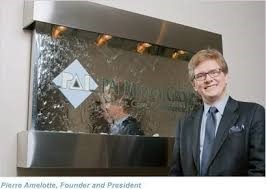 that, it caused us to look at the way we were doing business. I really wouldn’t have dreamt this, but Covid has actually benefitted us. Why? Because today people are working from home. They’re sitting at their desk, doing Zoom conferencing and they’re actually seeing themselves as they really are on their camera or computer. It’s caused people to say, “Wait a second. I didn’t think my hair looked like that. I didn’t think I looked that old.” They’re shocked and they want an answer.
We’ve been able to respond to this because we’re able to do virtual consultations that lead them to discuss their options without any inconvenience or embarrassment and reach the point where they want to come into our centers’ facilities and explore things further. It’s called the Zoom-boom of cosmetic surgeries.
[rml_read_more]
I asked our accountant to bring out the numbers, in terms of where we’re at overall this year and as of the end of 2020, we have just finished at 30% growth over last year. However, it’s not just our response to the pandemic that is creating new business opportunities, our steady growth is greatly dependent on our people. We have hair stylists, technicians, managers and associates who have been with us for over 30 years, and physicians for over 25 years. Clients really appreciate those relationships and the experience they bring to the table.
Having said that, our marketing has played an important role also. With COVID right now, a lot of facilities have cut back on their advertising. They think they should be holding back because people are not ready to make a decision. They could not be more wrong!
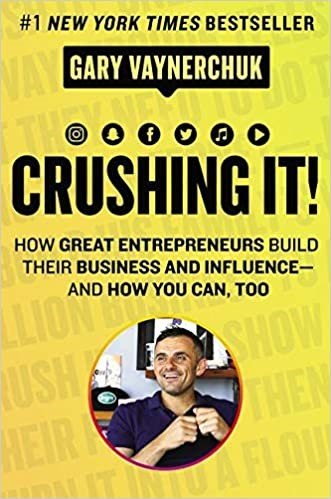 There’s a book out right now called “Crushing It! How Great Entrepreneurs Build Their Business and Influence – and How You Can, Too” and I can’t recommend it enough. It’s by Gary Vaynerchuck and basically, it’s about how great entrepreneurs got rich. If people took the time to read the book, they’d discover that now is the time to promote their services. This lull in the commercial marketplace is an opportunity to tell your story and get noticed.
I’d like to think I’m still in the younger generation, but I’m not. I recognize that. Today, young people are on YouTube. They’re not watching TV the way they used to. People are on Netflix. They’re on Instagram. They’re browsing the web. People want information. You got to change with the times. People who aren’t prepared to change are going to be left behind.
Which brings me to another thing. What is the profile of clients and patients who are coming in today? How are we adapting to their needs? Everyone is different physically and emotionally. Not everyone is a good hair transplant prospect because they may not have sufficient donor area, or their expectations are out of line. Well, the nice thing is we offer medical and non-medical options. Our clients have multiple choices.
 The job doesn’t end when you have set high standards. You still have to protect your reputation. There are still people out there who really don’t know what they’re doing. Every consumer complaint, wherever it comes from, is bad for our profession. I can tell you that since the day that we started in the hair transplant industry, we’ve always worked at resolving every issue. Over the years, we’ve come to understand our clients’ and patients’ expectations and we guarantee them results based on providing just the right amount of hair.
There is a methodology behind this which is our Multi-Unit Hair Grafting® process. We’ve trademarked our hair grafting processes and it’s unique. There’s always going to be this battle of FUE versus FUT and disagreements about which one is better than the other, but with our Multi-Unit Hair Grafting® process, we are able to transplant three times the amount of hair per procedure compared to others also using FUT surgery. It requires special skills because you need to combine different types of groupings of hair to give people the density they want.
FUE is a wonderful way of doing hair transplants but it’s limited because if you have extensive hair loss, you may get a certain amount of coverage, but it’s basically see-through hair if not done properly. And if your patient has worn a hair system before, will they ever be truly happy? No, they won’t; they will want more hair and so they will go back for more procedures. However, there’s only so much you can do because their donor area is limited. What we’ve been able to do is use natural hair groupings along with the follicular units in a way that actually complements the hairline and provides them with a very natural hairstyle.
The bottom line is people just want more hair. They don’t want more procedures.
Which brings us to robot-assisted hair transplants, which has created a real buzz. I believe it’s an awesome technology that’s certainly got its place in the industry, but they must be careful not to market it to the wrong people. Any physician can purchase this equipment and do a hair transplant tomorrow, and that’s the problem. It should only be in the hands of people who’ve had extensive training and years of experience doing hair transplants and understand the complexities and what can and cannot be done.
We’ve actually got Artas robotic equipment in our own facilities, but we only use it for the right patient. It’s not for everyone because if a potential patient’s hair is too thin overall, and particularly in the back of their head, then the donor hair is limited for an overall natural look, and therefore it’s not always the answer.
IHA: Artas, the company behind this hair harvesting technology, has also developed special software that allows you to envisage how you could place available donor hair to achieve different cosmetic results.
Pierre: Absolutely, and it’s great. However, envisaging the final outcome also comes with extensive experience from physicians who have been performing hair transplants for many years.
IHA: Do you think Artas is going to successfully master the technology that will actually place those harvested hairs in addition to simply acquiring donor hair?
Pierre: I hope so. Yeah. I totally hope they do get it. That’s the beauty of this industry. We haven’t even touched the potential of this market. I don’t care what anyone says today. 10 years ago, who would have believed that today we’d be doing up to 65 hair transplants a month in the PAI Indianapolis clinic? I once thought that’s never going to happen, but you know what? I can see us going to a hundred a month. With the right facilities and the right teams and the right people, it’s achievable.
IHA: We share your enthusiasm about the future, but let’s go back to the beginning. How did PAI Medical Group come about?
Pierre: I started in 1975. I went to George Brown College in Toronto to become a hairstylist. After graduation, I started working with brother Claude in Brockville, Ontario. Immediately thereafter, I started taking as many courses as I could afford. I went to the Vidal Sassoon Hair Academy in London; UK and I took the Martin Parsons Training and other courses. In 1978, I went to Minneapolis and took a hair replacement course with New Man. Shortly after that, they brought in Terry Bradshaw, the quarterback of the Pittsburgh Steelers, as a spokesperson to endorse hair replacement, and that was when hair systems and non-medical hair replacement really took off.
In 1979, I took a Dale Carnegie course in public speaking. Upon completion, I continued as a graduate assistant for 2 more years at night while working in the hair business during the day. I recognized early on the importance of public speaking if I wanted to succeed in business.
In 1983, I decided to team up with three individuals to go after the Canadian market and five years later, I branched out on my own. That’s when I began to network with a physician in Montreal, Dr. Robert Prescott, who was offering hair transplants and I quickly realized that there were a number of clients who had reached a point where they didn’t want to continue wearing hair systems. They were looking for other options. It was time to expand.
A few years later, I met someone you’ll recognize, Leonard Venti. He was a member of the Transitions Group while I was its president, and he asked to visit my studio in Ottawa and our hair transplant facility in Montreal. At that time, he said to me, “You need to come and open up in the US. There’s a company called Bosley that you need to see.” So, we met in Los Angeles to meet Dr. Lee Bosley. The place was busy. I’ll never forget it. We were looking at the appointment book because Leonard wanted to schedule a hair transplant and he preferred Dr. Bosley to do it. So, we looked at the appointment book and it was unbelievable, there were very few openings available. They had patients flying in from all over the country because of Dr. Bosley’s reputation. By the way, Leonard never did book any appointment after all.
That’s when I realized the brilliance of the model Dr. Lee Bosley had put together and I thought, you know what, this is something that I could probably do. It might take a few years, but I should try. So, after that trip I eventually opened up the PAI Nashville clinic, followed by others in Chicago and then Seattle, Portland, etc. Some of these were set up with independent Hair Club franchisees who wanted to add medical services. This was before Hair Club itself formed a marketing partnership with Bosley. So, what goes around, comes around.
One of the things I admired back then was the founder of Hair Club, Sy Sperling. He really understood marketing and opened up the doors for everyone in this industry. He also knew how to pick good people. I have had a lot of interesting situations over the years, because the industry certainly brings together some colorful individuals and you’ve got to be cautious.One important thing Sy conveyed to me was that you have to focus on good people who are going to grow with you.
Things in life don’t always work out the way you planned for a reason. You don’t always succeed. In fact, you’re going to fail a lot. When I decided to expand my business in the United States, I realized that I had to develop a medical management company to provide medical procedures through licensed physicians and technicians. I didn’t understand the complexity of it all at that time. You can’t imagine the roadblocks I came across! I can still remember the first place we opened in 1995 in Nashville with 2 co-owners David Lachman and Michael Ramsey, and we had so many patients that were sold and waiting for their procedures. To help out the new clinic, I eventually brought one of my physicians, Dr. Vance Elliott, who was already trained and qualified in Canada.
Needless to say, it wasn’t that easy. It was just one issue after another. I had to deal with US customs. I had to deal with US immigration, I had to deal with individual US state licenses. It was a nightmare! Then, I eventually met with the right lawyers and the right accountants. And I met the right immigration lawyers and that experience literally showed me how to do my research and plan ahead. There are no shortcuts.
We’ve come a long way since then and we’ve shared our learning and experience with our PAI Medical Group associates. Over the years, we’ve brought several US physicians to Canada to be trained in our facilities.
Most physicians are well educated in medicine but may not always have the right understanding about running and growing a business. They don’t always appreciate the value of and need for marketing – the fact that you’ve got to get the word out there! So, when I started meeting some of these physicians, they were interested in aligning with us. In fact, one of these physicians, Dr. Jeff Waesche, has been working with PAI Medical Group now for over 25 years, and to this day, our meeting was one of the best outcomes in the PAI Medical Group organization.
Today, that alignment also continues as we work with non-medical facilities selling only hair-system related services that need to expand to not only increase their reach but to also offer more solutions demanded by socially aware consumers. That demand often includes the ultimate solution through medical hair restoration services, whereby we successfully integrate a new and lucrative increment to their business model with hair transplantation services.
That’s a brief summary of where we started from and where we are today. Trust me, there were many, many more learning curves we had to navigate. And still do.
IHA: Pierre, you talked about Sperling being a dynamic presence in the market, and you have a strong personality yourself.Would it fair to say that your own energy was also a driving force?
 Pierre: You know what Chris; I think it really was. I’m often on the road to the PAI clinics in the US and Canada and learning from similar entities internationally. Obviously right now with COVID I’ve had to limit my traveling because every time I come back into Canada; I have to quarantine for 14 days. But I’ve always been on the road making connections and building the business and relationships.
I can still remember going into Chicago, Seattle, Portland and Nashville in the early days. These weren’t cities I knew. I would get to the airport; rent a car and the first thing I would do was get a map to study where I needed to go. I can’t tell you how many times I was lost at five o’clock in the morning driving around in the rain or fog.
I’ll never forget one time I got lost in Cleveland. I was trying to get to my hotel late at night. I kept seeing it from a distance, but because of some road construction I couldn’t get to it. Finally, guess who shows up behind me with their lights flashing – the police! Immediately I thought, what did I do; did I not stop? So, they ask me the usual things, “Show me your license?” “What are you doing here?” and I tell them I’m trying to find the Marriott Courtyard. And they say, “Do you know where you are right now? You’re in the heaviest drug infested area in the entire city. If you stop your car too long at a stop sign, you’re going to end up with no wheels on your car!” That was first time I had a police escort to my hotel. Young people today have no idea what it’s like to get out there and do the heavy lifting. At that time, I really had no money, and I had no choice, but I had the energy and the dream… and I still do!
As you know, I’m a big believer in reading positive, inspirational books. That is my passion. My late brother, Mark, introduced me to the motivational audiobooks of Zig Ziglar, Jim Rohn, Dennis Waitley, etc., which strengthened my way of thinking. You are who you are, you are what you are, you are where you are in life, by what you feed your mind on a daily basis. You change who you are, you change what you are, you change where you are in life, by changing what you feed your mind on a daily basis. Period.
I like to study people who have succeeded, and I continuously take new business courses. Last January, I took Dan Pena’s “The Trillion Dollar Man” course in London, UK. I always want to learn more about what makes things work. That’s the fuel that keeps my drive going. That and surrounding myself with the right success-minded people.
I am very optimistic about the future. I believe that young people today are going to be tomorrow’s clients. They understand they need to look good.

 They want to look good, and if the solution is there and the modalities that are offered are affordable, they are going to take advantage of them.
Then there’s the female market. Back in the earlier days, if you’d asked me, would we be working with a lot of women clients I would have I said no, not really. Because back then they represented less than 5% of all clients. Today it’s almost 50%.
IHA: Do you anticipate any new technologies or research impacting the business in the next 24 months?
Pierre: Well, I’m reading up about the stem cell research that’s going on and I think there’s going to be some great breakthroughs coming up. In fact, I was reading your latest Hair Authority issue where you were talking about it as well.
IHA: What is the one thing that you would like people at home to know about your organization?
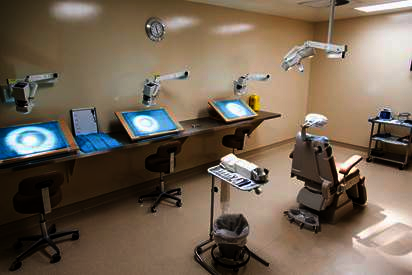 Pierre: That we offer all modalities; whether it’s hair systems, hair transplants, laser, PRP or stem cell treatments. We have over 30 years of experience. Our medical teams are strong, and we commit to getting the best results. If there are facilities offering non-medical hair loss solutions and would like to increase the scope of their business by adding medical hair restoration, PAI Medical Group may be a good fit.
IHA: Is there any question you would have liked us to ask?
Pierre: Yes, if someone wants to start in the hair restoration, would you recommend it as a good career path?
Now there are people out there that are going to tell you the industry is dying, but that’s just a reflection of their mindset. The reality is this, it is still an exciting industry. There’s a lot going on.When I look at the people that have really done well, they started generally with nothing. Smart newcomers are going to look at this industry and say, wait a second, here’s a misunderstood business opportunity that’s still got tremendous growth.
Of course, there are existing studios and clinics that can’t go any further because they’re limited in their thinking in terms of what else they could offer and bring to the table. That’s where PAI Medical Group will come in. We can assess that business and show them how to take advantage of new opportunities out there. To give you an example, our PAI Washington facility was previously owned Dr. Richard Giannotto who realized that at this point in his life he no longer wanting to do everything himself, he just wanted to do the procedures. So, I told him we had some investors that would like to take a look at his business model, and that’s exactly what I ended up arranging. And now happily, he works full-time with PAI Medical Group.
The last thing I want to say is this. I don’t care who’s in business; if they don’t have a strong and focused work ethic, they’re going to get run over by the people who do. And the other thing is, are they feeding their mind with the right material, the right books? They’ve got to discipline themselves to learn from reading the types of books I mentioned and associating with the right positive people.
When I took the Dan Pena course back in January 2020, one of the things that was brought clearly to my attention is this you’ll become as wealthy in your lifespan to the same extent as your three closest friends.
Now isn’t that an eye opener? Think about it. Pena says, “…show me your friends, and I’ll show you your future!”
IHA: Sitting across the desk from you is your right-hand man, Fred Corsale, let’s give him the final word.
Pierre: First, a quick word of introduction, Fred has been a true blessing in my life as well all my long-term staff, employees and PAI owners and associates across the US and Canada. My advisory board told me 15 years ago that I needed to bring someone like Fred on board and my initial thought was, I can’t afford a guy like that. And they said you can’t afford not to. How right they were! Fred’s who has a Master’s degree in business and a degree in engineering and speaks several languages. He’s the type of guy everyone needs in their organization to get things done. He’s the systems prime, not myself. He’s the guy behind the scenes that makes things happen.
 Fred Corsale: I realized from the very first time I talked to Pierre that this is an image awareness business. Everything we do from meeting a potential client to setting up systems and making processes work is ultimately about helping to enhance someone’s image. All we need to do is make someone’s life just a little bit better than it was when they first came through the door and we’ve done our job.
The PAI network we’ve established and grown over the years has attracted people in the hair industry who never thought of selling a hair transplant or a hair system. But when they elevate their mindset to thinking about improving someone’s image, then they understand the importance of this job.
We do everything we possibly can to make that person think about their potential in in more successful terms. To do this, we must understand our clients and patients on a very intimate level. Most people are not trained to do this. I’ve seen Pierre in action, he will sit with a potential client or patient and not even talk about hair at all for maybe the first half hour, 45 minutes or maybe a whole hour. Not one word about hair. He’ll talk about the person and what they’re thinking… and why they’re thinking that way. And what do people around him or her say? Eventually it comes around to talking about hair and then what they want for themselves. How they want to keep or grow their hair. It’s a technique using probing questions to understand and analyze in order to present a unique solution. This will help them see themselves in a new image that will help them increase their success in an aspect of their lives that was lacking it.
And, for the expanding network of PAI clinics and associates, it’s about finding the right people who want to increase their current skills and learn new ones with a focused drive to succeed. That’s how we’re growing the business. We just want to do it organically, one step at a time.
Finally, I’d like to say thanks to you, Chris, and the International Hair Authority Journal for exposing so many inside stories like ours in every issue. We’re all in this business together and as Pierre would say, “Keep up the spirit!”
Related Posts
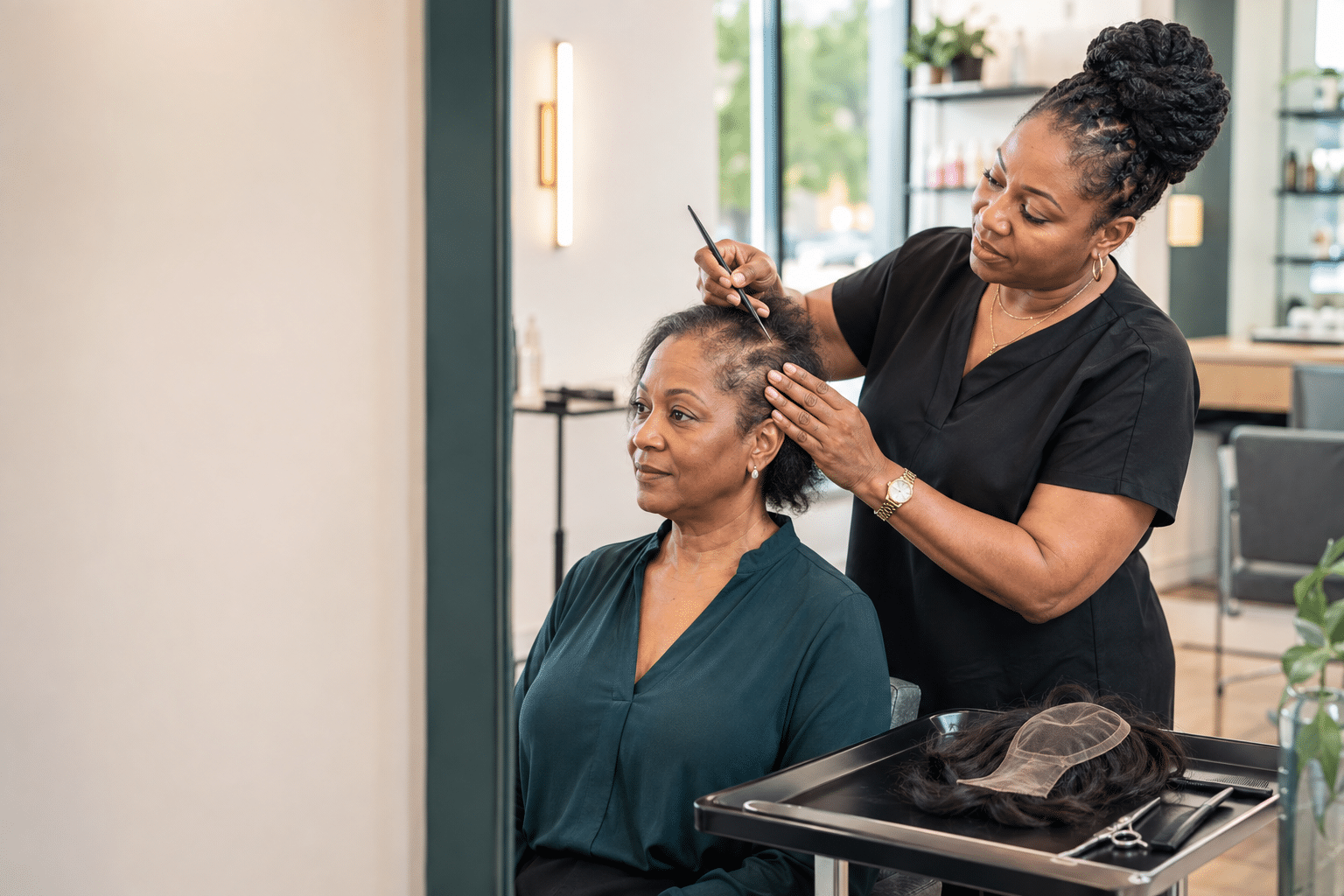
The Thinning Hair Attachment Safety Guide


When Hair Is Not Enough
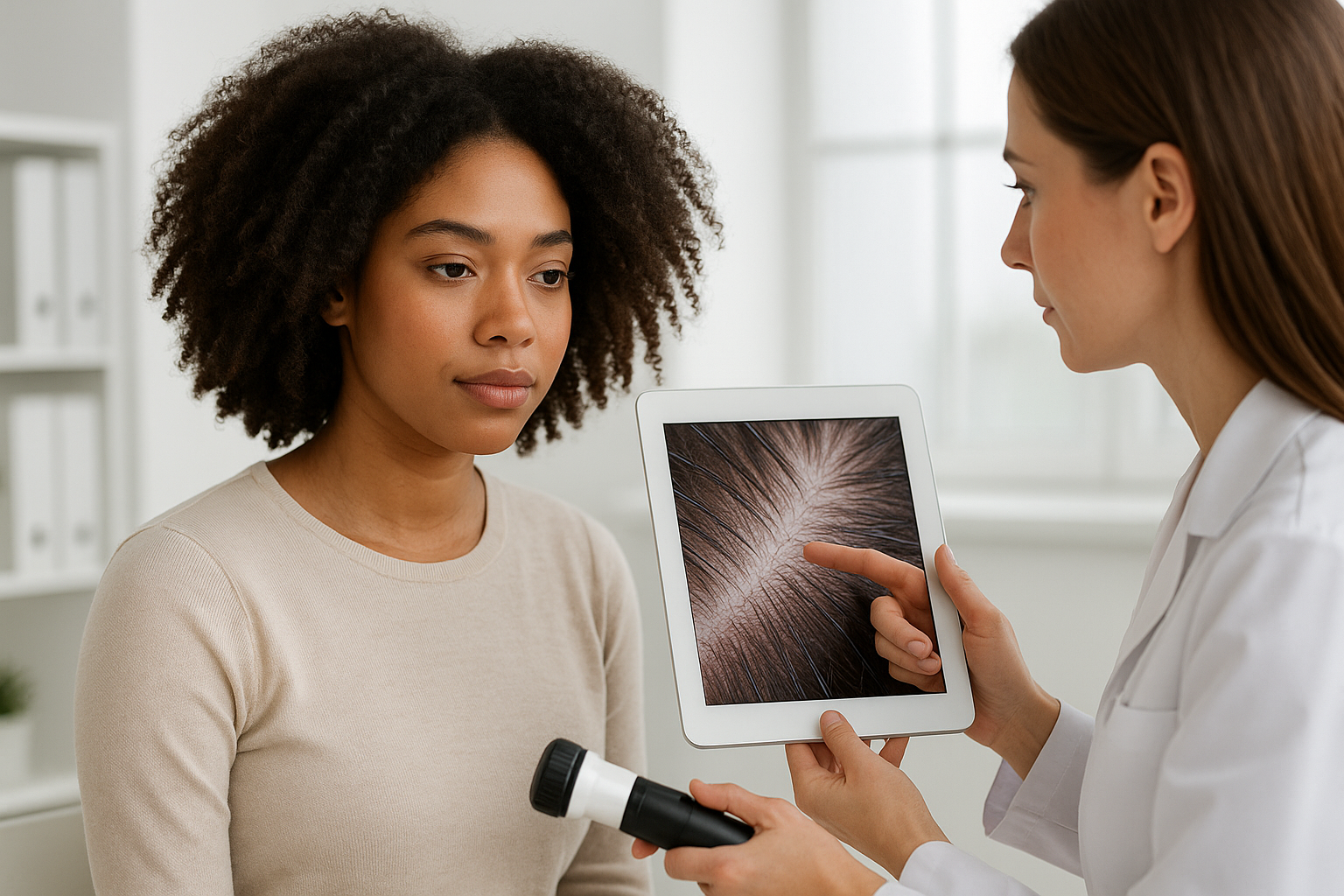
Bond-Strengthening Biotechnology

What If You Could See the Future You?

Just Say NO to Premature Cosmetic Procedures
Hair Wigs Human Hair vs. Synthetic: Which One Is Right for You?

Unseen Damage

Luxury Hair Replacement
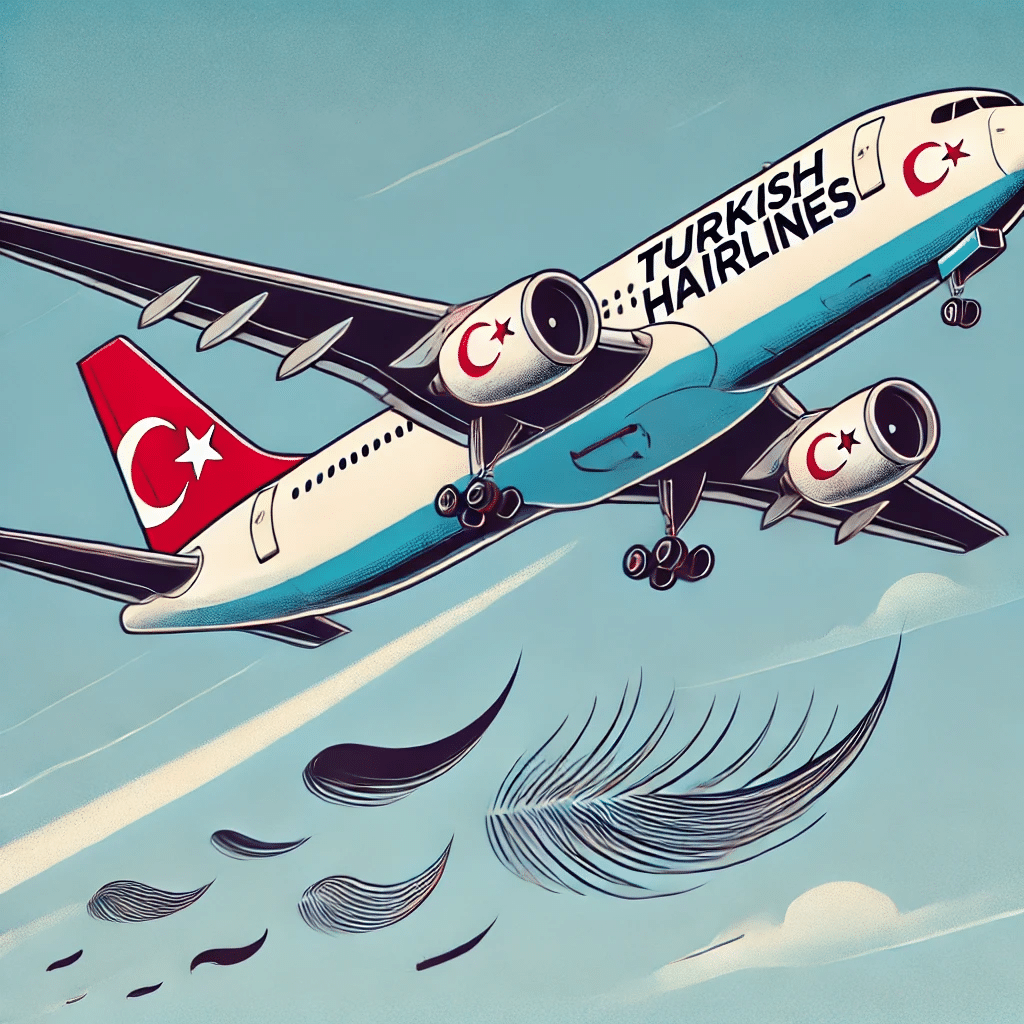
Turkish Hairlines Continues Growth

The Risks of Bad Hair Transplants What You Need to Know

New Dyson’s Styler Perfect for Hair Replacement Systems
Breakthrough Discovery
2 thoughts on “Still Thriving!”
You must be logged in to post a comment.
Captivating !
Thanks for bringing such vital information.