
Blog
Hair Club 2018


It’s All About People
Since Hair Club was first launched by Sy Sperling in 1976, the company has helped more than 600,000 people restore their hair. Hair Club now boasts nearly 120 locations throughout the U.S., Canada and Puerto Rico. In 2013, the company was acquired by Tokyo-based Aderans Co. Ltd, which also owns Bosley, allowing the group to offer a suite of surgical and non-surgical hair loss solutions.
As it celebrates its 42nd anniversary, the company is expanding its corporate headquarters and will be relocating to the former Interstate Plaza office building in Boca Raton, Florida, where it plans to create a modern and collaborative environment for its more than 120 local corporate staff members, including more than 60 contact center agents.
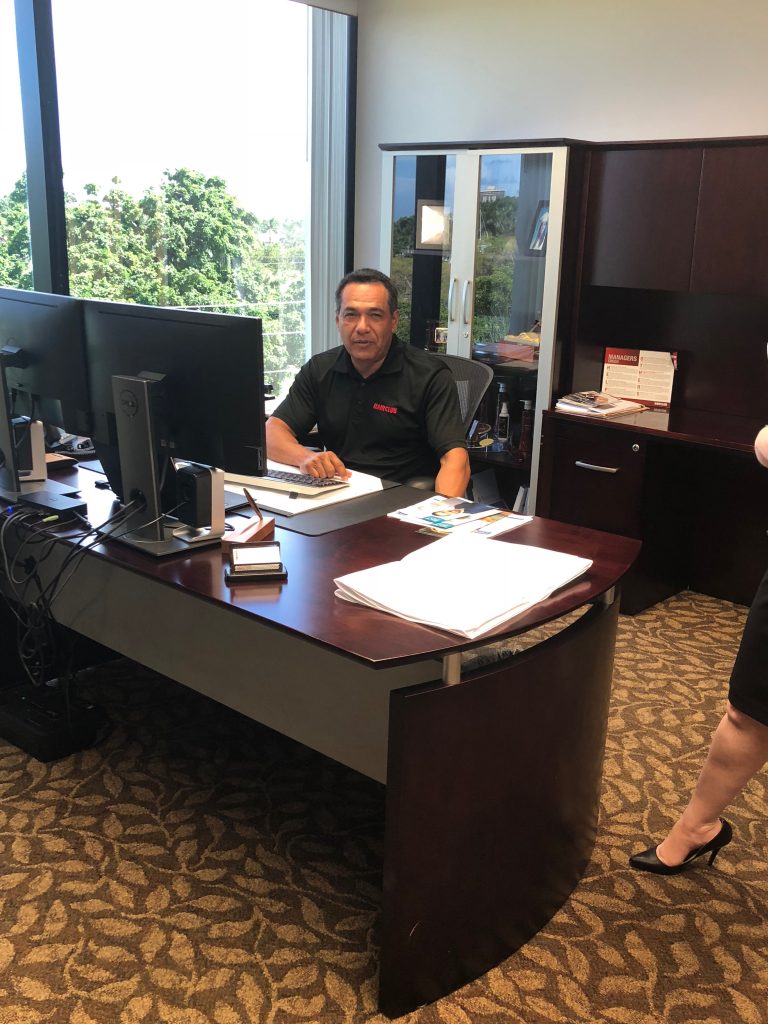
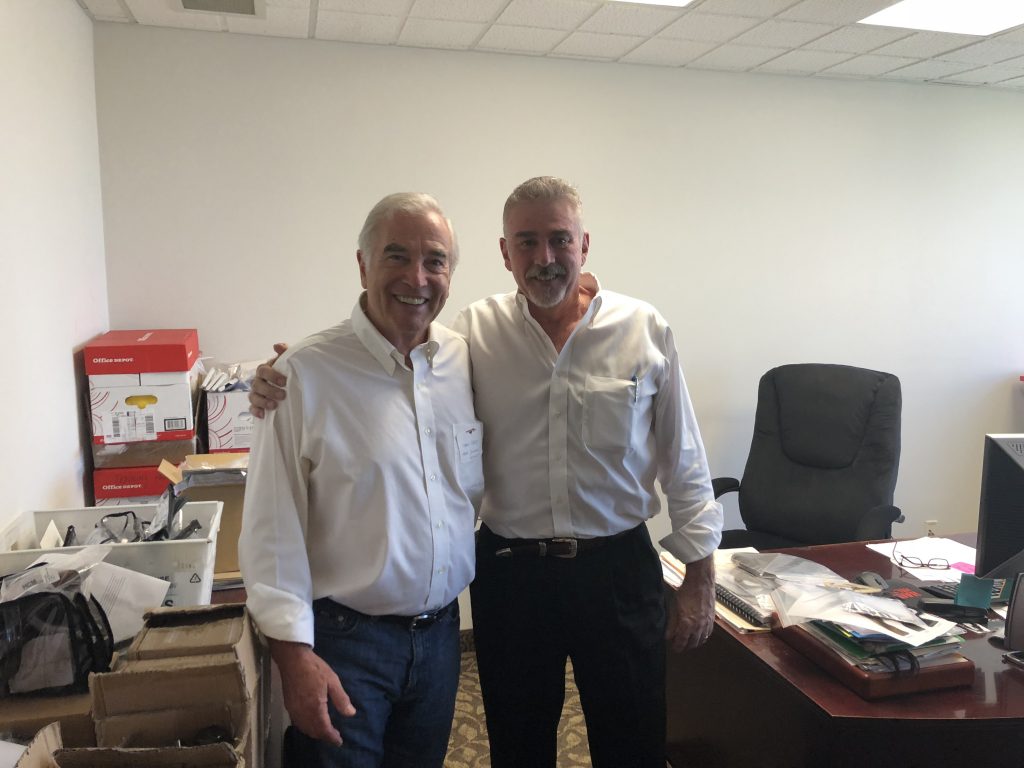
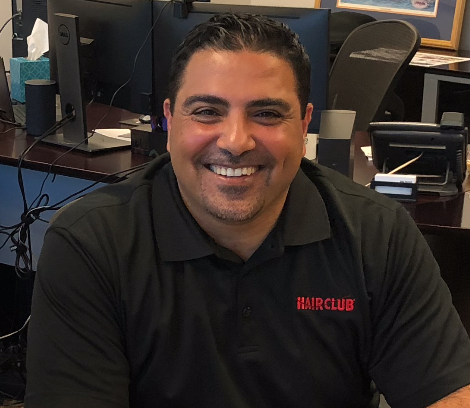
[The Hair Authority has interviewed every incoming Hair Club president and our meeting with President and COO Mike Nassar was overdue. To our surprise and delight, we were invited to join his management team at a special luncheon the company organizes regularly to recognize staff contributions and important
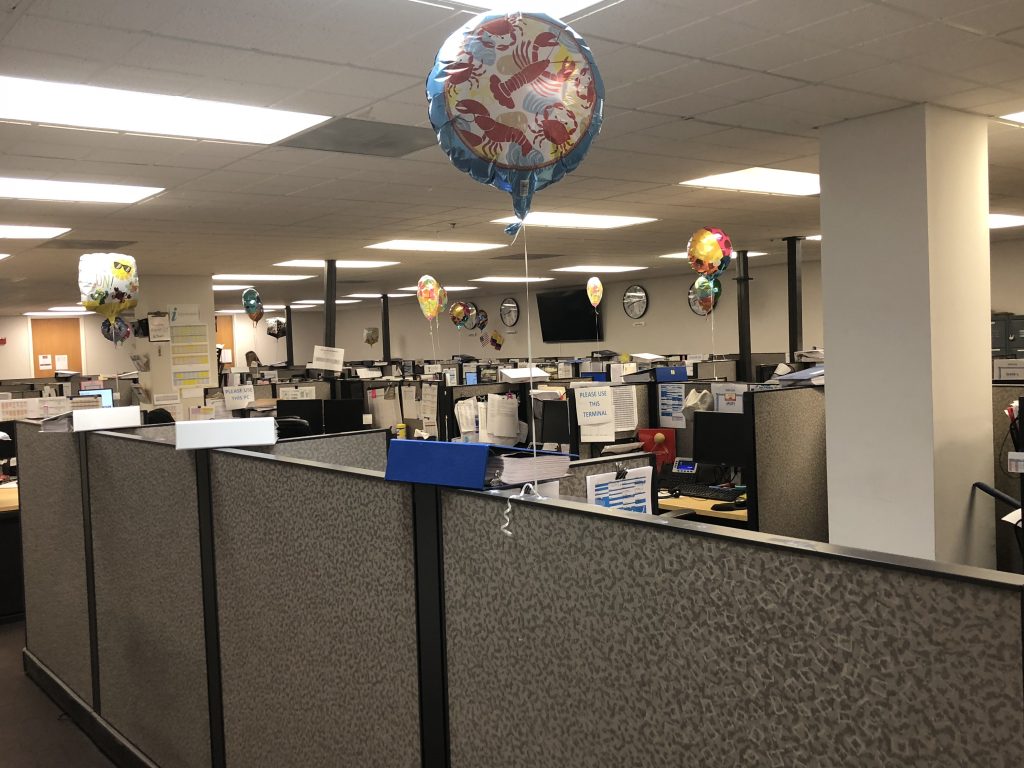
achievements. The team spirit was palpable and when we did our own research back home, we were not surprised to see it reflected in comments and reviews online at glassdoor.com. The following is just one example of an employee review, “They truly care about their employees. The perks of the job are amazing and there is always so much to celebrate. This company promotes a team culture and the best part is that we change lives daily by helping others regain their hair!”
[rml_read_more]
[Hair Authority: Mike, thank you for inviting us to join you at your staff luncheon today. It told us more about the company than we would have discovered in a regular interview. The old Hair Club was founded on a powerful personality, and that one personality drove the business. But that’s not what we saw today. Tell us about the new Hair Club.
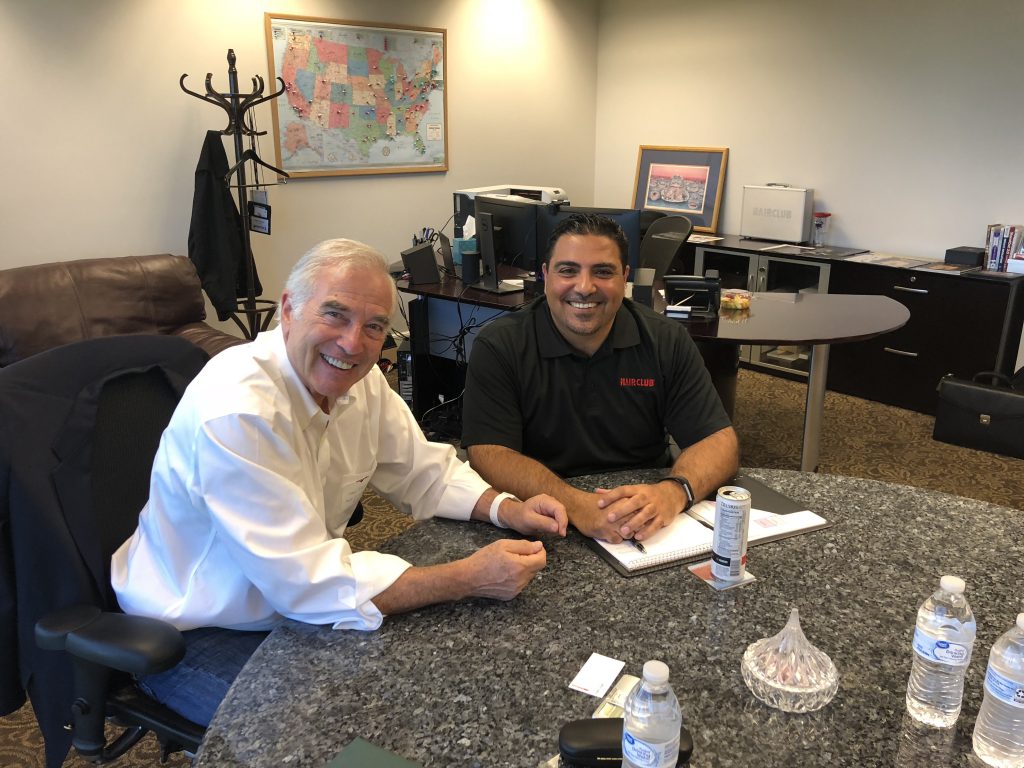
Mike Nassar: The first thing I want everyone to know is that we’ve simplified the name. Instead of Hair Club for Men and later, Hair Club for Men & Women, we’re now Hair Club, and we’re here for anyone dealing with hair loss. The other change you touched on is our focus on our staff. Our employees make things
happen for our clients. We made a huge investment in providing what we call the ultimate employee experience(UEE) and we see the benefits now in staff loyalty and level of commitment. When you have a dedicated staff, you have happy customers.
Hair Authority: After lunch, we heard everybody recite a Hair Club chant or mantra. What was that??
MN: They were saying, “We are Hair Club, We represent Hair Club.” It’s part of our culture. In this day and age, employee engagement can be a challenge. Our employees feel like they’re part of something bigger than just themselves. They’re part of the whole Hair Club organization, so we get a high level of engagement and huge productivity. And we all benefit from it.
Hair Authority: That reflects Aderans’ philosophy.
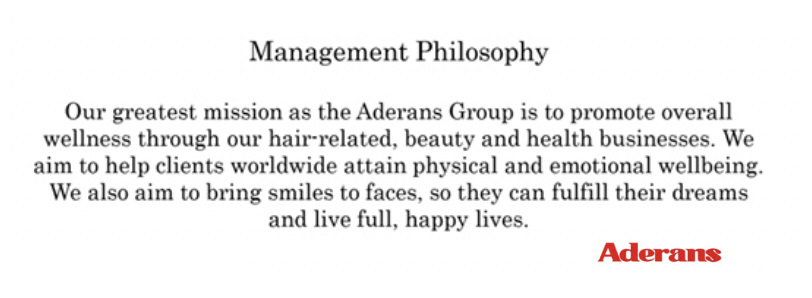
[MN: Yes, it’s Sampo Yoshi and it means a commitment to employees, a commitment to clients and a commitment to community. We had been thinking that way for a number of years prior to our acquisition by Aderans, but when we became part of Aderans, it really emphasized and bolstered our idea of helping others and giving back to the community. These commitments have become even more of a focus for us over the last two or three years.
Hair Authority: The formula appears to be working because Hair Club is doing very well at a time when the industry overall is consolidating. Is there another marketing secret?
[MN: We’ve been in growth mode since I’ve been here, which is a little over 13 years now. I know Hair Club has always had a growth mentality, so it’s not something I brought to the company. In fact, we’ve only closed two locations in the last 13 years. The company has grown every
single year for a number of years now. We’ve even opened 19 centers in just the last four years alone.
Hair Authority: It used to be that the best thing that could happen to a local hair replacement studio was to have a Hair Club open on the other side of the road. Things are different now. Those crumbs from the rich man’s table are not so plentiful. What changed?
MN: There’s always going be competition in every industry. But I think we can have friendly
[competition that makes everyone better because with more than 90 million people in North America experiencing hair loss, there’s enough business for all of us. We are a prominent advertiser for the entire industry, whether our competition wants to believe that or not. When we advertise Hair Club or promote other hair loss and restoration search terms, the whole industry benefits. By us simply being on the internet or TV and telling people to look for hair replacement or hair restoration—or any number of hair therapies—we end up building the market for everyone. Our high volume of advertising is feeding the entire industry, not just Hair Club. Out of the 90+ million people experiencing hair loss, we may get 200,000 leads per year… the rest are going somewhere else.
Hair Authority: Why is this still a fragmented industry that never created a coordinated campaign to create broad consumer awareness and grow the market?
MN: I’m not sure. I have been talking to competitors since I first started with the company, and I’ve continued the dialogue now as the president. The good news is my phone seems to ring more often, and I’m finding we do have a lot of common ground. These shouldn’t be negative relationships. We can all have a friendly, competitive relationship and still succeed in the marketplace. Competitors can collaborate and make improvements together, whether it’s in a market, a certain geography or even country-wide. The problem today is one of fragmentation among the smaller competitors. It’s sort of an ‘every man or woman for himself or herself’ environment. I think we can change that if we talk about it openly.
Hair Authority: In other product categories there are standards and measurements for performance. To take a parallel industry like dentistry, the American Dental Association grants an official seal of approval to brands that can demonstrate superior performance. That’s how Crest became the market leader. But the hair replacement industry has no standards of any kind. Do you think that leaves us vulnerable?
MN: Cosmetology standards are mostly governed by states, but I do think the hair replacement category could hold itself more accountable. It’s done well on the surgical side through the ISHRS and I’m sure most dermatologists that people see for hair loss belong to a professional, accredited group. However, we don’t do that on the hair replacement side. We’re completely separate from salons that don’t do hair replacement, and we don’t talk enough about our specialists’ skills. It’s a bridge we need to build because the public is looking for hair loss experts but have no way to identify who is qualified to help them.
Hair Authority: The medical field suffers from a similar problem. Hair transplantation is seeing people entering the field who have little or no surgical training. They may have come from a trauma background or even be a dentist. Worse yet, the arrival of computer assisted devices like the ARTAS system allows doctors to offload critical surgery to assistants without specialized training. In response, ISHRS has established itself as THE educational authority on surgical hair restoration. Their mission is providing education, setting standards and accrediting doctors with specialized hair restoration skills. Which prompts the question, isn’t it time that we did the same thing for the hair replacement market?
MN: Many companies, including Hair Club, have talked about trichology and some of them have already jumped into it. In North America, trichology isn’t as big of a deal as it is in Europe—yet. Many of our
European competitors will tell you that every single one of their employees is a certified trichologist, and we could probably learn from them. This could be a smart way for our industry to step up operations, increase professionalism and be more of an authority on hair loss.
Hair Authority: Subscribers to The Hair Authority include hair replacement studios, hair restoration clinics, even drug companies like Merck. What would you would like them to know about Hair Club?
[MN: Hair Club is a company that’s shown steady and consistent growth for the last 42 years. Nowadays, we’ve made it our mission behind the scenes to start working on ways to innovate for the business and the industry. There are still people who look down on what we do. They call us “just a toupee company“. I use the word “just” because that’s how they refer to us. They don’t understand how much we impact people’s lives. We do that every day, and whether it’s Hair Club or any one of our competitors, we are making a difference in the lives of others. It’s about more than just hair. It’s about changing the way our clients experience life. I think it’s about time that we as an industry step out into the open and share this information with the public. We all need to come together to do that.
Hair Authority: Part of our problem might be that we are still victims of the old language and the old imagery. At The Hair Authority, we flinch when we hear somebody talk about a “piece”. Is it time to reinvent ourselves, come up with new imagery, more attractive language, create a new vocabulary?
MN: Absolutely, and there are ways to do that. We’ve got to speak in the customer’s language. There was a time when plastic surgery wasn’t something you talked about openly. Now, that has changed completely. Once upon a time, even hair extensions used to be a private affair; women who wore hair extensions didn’t tell other people about them. Now you can go on any social media platform and see pictures of women flaunting their extensions all the time. So, I think we can go that same route. At Hair Club, we’re trying to make it more about your “after” look than your “before” look. Whatever your “before” situation was really shouldn’t matter. It’s all about your life after restoring your hair. We provide solutions to help you get there. Whether it’s preventative, adding hair or even complete restoration, we offer something for everyone. We customize solutions to give you the best hair you can possibly have.
Hair Authority: We flippantly asked at lunch today, if the hair fairy granted you one wish, what would it be?
MN: Simple.It’s getting what we do to be more mainstream and better received by the public. We want people of every age and demographic to feel comfortable contacting us—because we have solutions for everyone. It could be an 18-year-old who has just started to thin and sees his dad losing almost all his hair. We’d like to help that young person early on instead of them waiting until they lose their hair. The whole concept of personal care and overall wellness needs to come into play. Clients who come in for hair replacement aren’t just concerned about their hair. They’re going to a plastic surgeon, they’re going to weight loss centers, they’re going to gyms. We need to be part of that universe. It all has to come together so people can be the best versions of themselves.
Hair Authority: So, you believe hair replacement is not just a thinning hair solution, it’s part of a lifestyle.
MN: Absolutely. We sometimes get a bad rap because people think we “force” our clients into programs or memberships, but we’re actually making it easier for our clients. For a monthly fee, they can get anything and everything they want in terms of their style, the number of visits or services they want and the number of new hair systems they want per year. That’s the beauty of it. Nobody is ever forced into a service plan. When a client chooses Hair Club, we become their full-service salon and part of their overall lifestyle. Visiting Hair Club becomes like going to the gym. We’re now part of their self-care routine.
Hair Authority: As one of the biggest purchasers of hair, we have to ask, is the industry running out of hair?
[MN: I visited all our factories in March. It was a seven-country tour and I can tell you they have plenty of inventory. They’re getting calls all the time from hair wholesalers and brokers and they assure me that we’re not running out of hair. What they couldn’t assure me of is the quality of the hair and whether that’s going to decline or improve. Unfortunately, I suspect hair quality will decline as more people copy western fashions by coloring and processing their hair before donating it.
Hair Authority: What is the biggest challenge facing Hair Club today?
MN: Our biggest challenge is getting people to come through the door. We need to find new ways to communicate with today’s consumers. Gen X, Gen Y and Gen Z have different motivations compared to the clients we’ve had on board for the last 40+ years. How do we motivate a new generation to come in, so we can help them with their hair loss? Obviously, the increasing cost of hair, the cost of facilities and the rising cost of labor aren’t helping, but we can offset that with better marketing that makes it less scary for people to come in. The first time somebody visits us, they don’t know what they’re getting into because we don’t explain the hair application process in our advertising. It may not be glamorous to do that, but the world is changing. There are personal products being sold openly today that people would have been embarrassed to be seen with five or ten years ago. We have to move in that same direction in order to capture a wider audience.
We need to find new ways to communicate with today’s consumers.
MN: There’s plenty of opportunity for expansion in the industry. A cure for hair loss doesn’t really exist yet and more and more people are going to need our help. We have to position ourselves as a caring industry that can help people…and we should give back to society.
Hair Authority: Any final comments?
Hair Authority: It’s a very fertile market. Our challenge has been we’ve never known how to connect with it.
MN: Absolutely, and I think that’s key. We’ve got to connect to the consumer, but we’re not seeing it yet. The person who needs our services isn’t coming into Hair Club. We have to figure out how to get them to come in, so we can show them everything we can do for them.
Hair Authority: The walled garden which protected hair replacement for so many years no longer exists. It was good while it was there. But now the walls are down, and the medical/cosmetic/pharmaceutical companies are eyeing an aging population that used to be our home base.
MN: I believe we need to cultivate a bigger garden
Related Posts

Autumn Shedding

The Thinning Hair Attachment Safety Guide

When Hair Is Not Enough
Bond-Strengthening Biotechnology

Nutrafol Becomes MLB’s Official Hair Growth Partner

New Hope for Teens Facing Sudden Hair Loss

Beauty on Trial
What If You Could See the Future You?
Independent Hair News Source Joins Telehealth Brand

Cambridge Researchers Harnessing Cellular Energy

Hair, Health, and Hope
Hair Loss Tops Global Beauty Concerns
One thought on “Hair Club 2018”
You must be logged in to post a comment.
Well thought out.